Tag Archive: wine

Hints of Cherry and Witch’s Urine? (1400 AD)

By Tony Perrottet

Today’s oenophiles have to consider the possibility that their valuable wine bottles may be corked, oxidized, “maderized” (ruined due to over-heating), re-fermented (gone fizzy in the bottle) or sullied by a contaminant.

Things were much easier in 16th century Italy: You could just blame the witches. It was commonly believed that after their satanic midnight Sabbath parties witches had the nasty habit of invading a village’s wine cellars and sullying the vats with their urine or excrement. This, needless to say, did nothing for a wine’s bouquet. Thousands of European women were being burned at the stake for their evil powers, but somehow the problem could not be controlled.

The situation was better if you happened to live in northern Italy’s alpine province of Friuli on the border with Austria (still a fine wine-producing region), because there dwelt a team of occult heroes: the benandanti, or Good Walkers, a revered group of men who practiced white magic for the protection of local vintners. These specialists were identified at birth – they emerged from the womb with their faces wrapped in the caul or amniotic membrane – and as they grew up, they were instilled with a sense of sacred duty. By adulthood, a Good Walker would regularly slip into a deep, trance-like sleep, when his spirits could leave his body and sally forth to do battle with the witches. Not only would these spirits protect the wine in the cellars, they saved the annual crops from devastation and stopped witches from sucking the blood from infants or stealing souls from the innocent. Often,
these supernatural wine regulators returned from their moonlit journeys victorious; at other times they woke up exhausted and defeated.

Around 1575, the Inquisition grew suspicious of these strange men, but after many extended interviews, investigators decided to class their gifts as “benign magic” rather than satanic, and no executions were ever carried out. Perhaps, like many a gout-ridden cleric of the period, they too were connoisseurs of the grape.

SOURCE/FURTHER READING: Ginzburg, Carlo, The Night Battles: Witchcraft & Agrarian Cults in the Sixteenth & Seventeenth Centuries, (London, 1966).

Tony Perrottet is author of Napoleon’s Privates: 2,500 Years of History Unzipped, The Naked Olympics: The True Story of the Ancient Games, and Pagan Holiday: On the Trail of Ancient Roman Tourists, among others. He can be found at TonyPerrottet.com.

IMAGE: Courtesy of MSNBC

If Wine Could Talk

How did the triple-expansion steam engine of the late 19th century
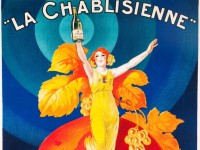
drive Henri de Toulouse-Lautrec to absinthe, La Fée Verte?

By Michael Bywater

The wonderful John Aubrey, snapper-up of well-considered trifles, wrote in his Brief Lives that “When a boy, he did ever love to converse with old men, as living histories.”1

You might say the same of wine; each bottle, each vintage, each vineyard is a living history, and to drink it happily is to enjoy a conversation, not only with one’s companions gathered around the corkscrew, but with the wine itself. And curiosity about wines begins much the same as curiosity about other people: their names, their provenance, their appearance, the essentials and differences of their personalities.

And, as with people, as time goes on more intimate or idiosyncratic curiosities emerge. We start to ask questions. What are their stories? What are their peculiarities? Why is this rot foul, but that rot noble? Who was the original Robert Parker? Why are there great bunches of jangling mechanical grapes on the organ at Weingarten Abbey? Why did that most celebrated of wine nations, France, suddenly turn to the frantic and crapulous absinthe? How did a wine-bibbing Symposium of classical Athens actually go? Do we really drink red wine too hot now, and why?

Follow the trail and historical curiosities elucidate themselves, just as if we were gently questioning a new friend on her life. The foul rot attacks the cork, while the noble sweetens the grape. The first recorded version of the influential and utterly confident wine critic Robert Parker is none other than the tireless encyclopaedist Pliny the Elder, who died at Vesuvius in 79CE. The mechanical grapes are an homage to the local wines that enriched the monks and paid for the organ. The triple-expansion steam engine shortened the Atlantic crossing until the phylloxera aphid could survive the journey and devastate the French vineyards, whose roots were vulnerable to its attacks; no wine, but the French had to drink something, and so they turned to La Fée Verte. The Symposium was, you might say, hell. Red wine too hot? Yes; for our houses are now far hotter then they were, and so “chambré” is hotter, too.

The difficulty, as always, is knowing when to stop. There is always another cork to be drawn, and always another story to emerge, genie-like, from the bottle.

1 John Aubrey, Brief Lives. Ed. Richard Barber (Rochester, NY, 1982)

Michael Bywater is author with Kathleen Burk of Is This Bottle Corked?: The Secret Life of Wine. He is also a well known broadcaster, and culture critic.