Tag Archive: Judah Benjamin

By Dara Horn
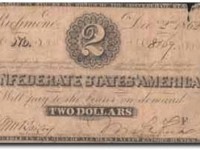
The old American South ranks high on the historical list of institutionally bigoted societies – which is why most people are surprised to learn that the Confederacy’s Secretary of State, whose face was even featured on the Confederate two-dollar bill, was a Jewish man named Judah Benjamin. But what is even more astonishing than a Jewish man’s prominence in Confederate politics was his outlandish escape from the Confederacy at the war’s end. It’s a story that makes 19th-century dime novels seem realistic.
Judah Benjamin was one of those rare people who are described, depending on the speaker’s beliefs, as either ambitious, brilliant, craven, lucky, or blessed. Born in 1811 in the Caribbean to impoverished Jewish parents whose ancestors had been expelled from Spain in 1492, Benjamin moved with his family to the Carolinas at the age of two.
A child prodigy, he was admitted to Yale Law School at the age of 14—and if you’re wondering how on earth anyone could be admitted to Yale Law School at the age of 14, well, the people at Yale must have been wondering too, because he was expelled from Yale Law School at the age of 16. His lack of a law degree, and the persistent public anti-semitism that dogged him all his life, did not stop him from becoming a successful attorney in New Orleans, or from being elected to the United States Senate, where he represented Louisiana, or from becoming a contender for a seat on the United States Supreme Court just before Louisiana’s secession from the Union. Within the Confederacy, he had a similarly meteoric career, becoming the Confederate president’s most trusted adviser and spymaster while simultaneously serving as Secretary of State.
Yet with the Confederacy’s collapse, his indestructibility rose from mere persistence into the realm of the supernatural. As the Southern capital burned and the Confederate cabinet fled their Yankee pursuers, Benjamin recited poetry and philosophy to cheer his despairing colleagues. When Lincoln was assassinated and Northerners began to call for Confederate leaders’ executions, the cabinet refugees split up—and Benjamin’s miraculous odyssey began.
Continue Reading »