While Wonders & Marvels hums along as usual (with the help of my amazing editorial team), I’m actually spending the summer in France. Yes, France. To be more precise, the South of France. Aix-en-Provence. Yes, it’s a rough life.
I’m here teaching at my university’s study abroad program. We’ve had a program in Aix for almost 50 years. One of the greatest perks for faculty is that we get to teach in rotation here.
Several years ago, my family and I spent a full year in Aix. So being here is like coming home. In fact, just yesterday, we had our neighbors—whom we’ve known for years–over for an American breakfast. You can imagine how fun it is to serve grits and bacon here!
Aside from the grits, I can’t begin to tell you how delicious it is to be here. First, of course, because of all of the delicacies to be found. Fresh fruit and vegetable markets dot the city each day. Olives, tapenade [an olive spread], fresh goat cheese, and wine—de préférence, rosé, are a staple for our evening aperitif.
It’s delicious to me for an even more important reason, however. As a professor, I am nearly giddy with the opportunities my students and I get to share together. I’m teaching a course called “Textes et Contextes,” which covers history, art, and literature from the Middle Ages to the Eighteenth Century.
Last week, I talked to the students about medieval architecture—and particularly the shift from Roman to Gothic styles in church construction. A student had a question about a specific type of arch. I pulled up some Google images to give her a better idea. Then it occurred to me…duh, we were literally RIGHT NEXT DOOR to a 13th century church: Saint Jean de Malte.
As we take stock of this past year and look forward to the next, I’d like to send a hearty THANK YOU to the folks who have helped make this website possible:
Jennie S.
Melissa S.
Cole G.
Diane Saarinen
Our fabulous guest writers and their publishers
Our wonderful and every growing number of inquisitive readers
And last, but not least, the inimitable Tina Caldwell…who is the glue who holds it all together.
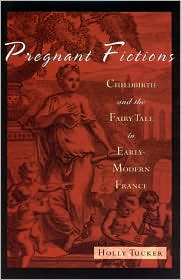
This has been a week of book giveaways…lots of them. So I suppose it wouldn’t hurt to add my own book on fairy tales into the mix. Though it does feel a little weird to do such self-promotion, particularly for a book that’s been out for awhile. (Don’t worry, I won’t be so self-effacing when my next one, Blood Work: A Tale of Medicine and Murder in the Scientific Revolution, comes out with W.W. Norton next year!)
Anyway…here goes…
Pregnant Fictions: Childbirth and the Fairy Tale in Early Modern France looks at the intersection of medicine, midwifery, and tale-telling in the earliest European fairy tales. It turns out that fairy tale writers (mostly all women) knew a lot about what was being cooked up in the (mostly all male) medical community when it came to theories on where babies came from.
Did you ever notice that fairy tale mothers are either infertile and/or give birth to daughters? Ever wonder why that might be? In the meantime, share a “wives’ tale” about pregnancy in the comments for a chance to win a copy of Pregnant Fictions. What tales did your mother, her mother, her mothers-mother tell about making, carrying, and birthing babies that you think might date back centuries?
I won’t divulge my age, but I will mention that a birthday on November 3 makes me a Scorpio.
And because this blog is about history and not me, I’ll use this opportunity to transition into a discussion of bloodletting.
How’s that for a fluid transition?
Astrology and astronomy were not two separate fields in the early-modern era. In fact, astrology and medicine were also inextricably linked. While most bleeding was done from the arm, it was sometimes thought advantageous to bleed from other parts of the body depending on the ailment.
The bleeding chart above shows the places of the body that are governed by specific star signs. The heart is connected to Leo. The feet, Pisces. Libra, the gut. And Scorpio, well, ouch!
A barber-surgeon would do well to consult this or any of the many, many charts like it before bleeding. Any bleeding from the body part that matched the current star sign was ill-advised.
I’m sure men everywhere are relieved that the stars are in Scorpio right now.
Holly Tucker is the Editor of Wonders and Marvels. (and a Scorpio!) Read more about Holly here.
Witches can be nasty creatures…and doubly so anywhere near newborns. Just think about the evil fairies in Sleeping Beauty or Snow White. Nothing to trifle with!
If witches and mean fairies seem to be circling baptisms and childbeds in fairy tales, it has a lot to do with the fact that–according to popular legends–they were in need of supplies for their devilish rituals.
According to early-modern writers like Jean Bodin, Cardano, and Della Porta, the fat of newborns was a vital ingredient in magical flying potions. Witches were also said to make candles from an infant’s umbilical cord.
Other byproducts of labor were also reported to have great mystical properties. The placenta was considered by some to be an aphrodisiac and, if eaten, could be used to treat infertility, a practice that the church condemned.
These and other concerns regarding what the midwife-witch might do with human flesh and body fluids motivated regulations in German (Wurzburg, 1555) that clearly specified how the midwife was to dispose of all biological bi-products during the delivery. Morever, frequent laws were passed in France that dictated that only woman of good Catholic faith could help a birthing mother.
When I finished the book, I thought a lot about why I loved it so much. I’m a professor, after all! We’re supposed to take everything apart.
I found my answer on page 25.
I realized that the book appealed to me at a number of levels. The story, of course. It’s gruesome, fascinating, and compelling. The architecture of the story-telling too. Larson’s attention to the details of the story’s construction leap from the page. But, there, on page 25, architecture and storytelling all came together:
“[Root] envisioned digging down to the first reasonably firm layer of clay, known as hard-pan, and there spreading a pad of concrete nearly two feet think. On top of this works would set down a layer of steel rails stratching from one end of the pad to the other, and over this a second layer at right angles. Succeeding layers would be arranged the same way. Once complete, this grillage of steel would be filled an discovered with Portland cement to produce a broad, rigid raft that Root called a floating foundation.”
I didn’t realize it as I was reading…but I had just learned how to build a skyscraper! And as a native Chicagoan, I can never look at those gargantuan buildings the same way.
I think Cynthia Crossen, who writes the Wall Street Journal’s “Book Lover” column, explains it even better than I do. Take a look at her recent article “Learning While You Read.” She’s talking here about historical fiction–but the best nonfiction writers are also the ones who pair impeccable research with meticulous attention to narrative.
Frankly, I’ve always wondered why more of us in higher education don’t craft more accessible stories. After all, in my classes, I tell stories all the time to lure my students into history (in my case, the history of medicine).
Yet, until recently, I had not found the courage to link research with compelling storytelling in my own writing. And, believe me, it takes courage–bucking as it does some long-standing conventions in academic publishing.
So now one of my favorite quotes is this one, again from Larson:
“I write to be read. I’m quite direct about that. I’m not writing to thrill colleagues or to impress the professors at the University of Iowa; that’s not my goal….I want to be accessible and I want to convey something.” [Full interview here]
Great advice! As I burn the midnight oil to wrap up my next book (coming out with Norton next year), I don’t think that I’ve ever enjoyed my research and writing more.
Holly Tucker is Editor of Wonders and Marvels. Read more about Holly here.
A new report out from Washington University-St. Louis shows that movies depicting historical events can increase recall of facts in classroom settings. The problem: The recall goes both ways. Students will remember historical information 50% more often; students recall both accurate AND inaccurate information depicted in the movies.
So word to the wise…always get your facts straight!
And if you are a university science news junkie like me, you absolutely must subscribe to the new site, It’s a news consortium for some of the United States’ top universities (including Vanderbilt University…)
Holly Tucker is the Editor of Wonders and Marvels. Read more about Holly here.