Tag Archive: Confederate

General Henry Wager Halleck’s Half-Hearted War

By Donald Stoker

One of the many things distinguishing my book from the other 60,000 volumes on the U.S. Civil War is its focus on strategic decisions and their effects.

For example, when Abraham Lincoln removed George B. McClellan from his post as general in chief in March 1862, Lincoln reorganized the Union’s departmental structures and placed Henry Wager Halleck in command of the west.

At this moment Halleck had two primary options for acting against the enemy: He could drive on Corinth, Mississippi, and the Confederate army massed there under P.G.T. Beauregard, or he could follow McClellan’s plan and take Chattanooga and push deeper into the Confederacy.

The Prussian military theorist Carl von Clausewitz, when advising commanders to go after enemy centers of gravity (by which he meant sources of strength), includes among them the enemy’s army. But he also says that sometimes an opening may arise that is so advantageous that a commander should ignore the enemy’s center of gravity and seize it.

Such was the Union’s situation in the west that in the spring of 1862; Halleck could strike the enemy’s main western army or seize Chattanooga. Doing either would crack the South’s strategic position in the west and lay the groundwork not only for the capture of the Deep South, but also Union victory.

Halleck, in his inimitable fashion, chose to do neither. He marched on Corinth, but he aimed at the city as a valuable point, as a rail junction. This was a gigantic strategic blunder. He took the city—eventually—but he failed to destroy the Confederacy’s western army. Moreover, he also gave the Confederates time to secure Chattanooga. It would be October 1863 before the Union took Chattanooga. It didn’t have to be this way.

Donald Stoker, author of The Grand Design: Strategy and the U.S. Civil War (Oxford University Press, 2010), is Professor of Strategy and Policy for the U.S. Naval War College’s program at the Naval Postgraduate School in Monterey, California.

IMAGE: Portrait of General Henry Wager Halleck

Jewish Confederate Saved by Talking Parrot

By Dara Horn

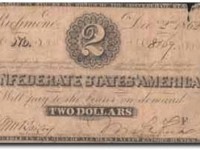
The old American South ranks high on the historical list of institutionally bigoted societies – which is why most people are surprised to learn that the Confederacy’s Secretary of State, whose face was even featured on the Confederate two-dollar bill, was a Jewish man named Judah Benjamin. But what is even more astonishing than a Jewish man’s prominence in Confederate politics was his outlandish escape from the Confederacy at the war’s end. It’s a story that makes 19th-century dime novels seem realistic.

Judah Benjamin was one of those rare people who are described, depending on the speaker’s beliefs, as either ambitious, brilliant, craven, lucky, or blessed. Born in 1811 in the Caribbean to impoverished Jewish parents whose ancestors had been expelled from Spain in 1492, Benjamin moved with his family to the Carolinas at the age of two.

A child prodigy, he was admitted to Yale Law School at the age of 14—and if you’re wondering how on earth anyone could be admitted to Yale Law School at the age of 14, well, the people at Yale must have been wondering too, because he was expelled from Yale Law School at the age of 16. His lack of a law degree, and the persistent public anti-semitism that dogged him all his life, did not stop him from becoming a successful attorney in New Orleans, or from being elected to the United States Senate, where he represented Louisiana, or from becoming a contender for a seat on the United States Supreme Court just before Louisiana’s secession from the Union. Within the Confederacy, he had a similarly meteoric career, becoming the Confederate president’s most trusted adviser and spymaster while simultaneously serving as Secretary of State.

Yet with the Confederacy’s collapse, his indestructibility rose from mere persistence into the realm of the supernatural. As the Southern capital burned and the Confederate cabinet fled their Yankee pursuers, Benjamin recited poetry and philosophy to cheer his despairing colleagues. When Lincoln was assassinated and Northerners began to call for Confederate leaders’ executions, the cabinet refugees split up—and Benjamin’s miraculous odyssey began.