Tag Archive: botany

The Silent World of Leo Lesquereux

By Bob Silliman (Atlanta Science Tavern Contributor)

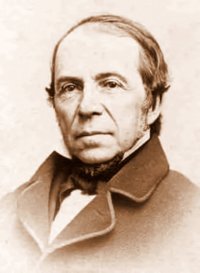
Leo Lesquereux (1864)

Leo Lesquereux (1864)

In 1848 Leo Lesquereux left his native Switzerland for America. Initially a teacher and then a watchmaker, he had turned to natural science and had become the foremost expert on peat in Europe. Finding it prudent to take his family to the New World in this age of revolution in the Old, he hoped to transform his knowledge of peat into a new scientific employment in America joining the vital enterprises of his fellow Swiss emigrant, the celebrated Louis Agassiz. Although his connection with Agassiz was a distinct advantage, the fact that he was profoundly deaf was a serious drawback in the work he chose, explorations in fossil botany, and in everything else.

Yet after unstinting labor he became the leading student of coal flora and a pioneer in the establishment of fossil botany in the country. Travel in an unfamiliar land to discover new specimens was full of difficulty, as were his attempts to communicate with “the Yankees.” Sometimes he encountered bizarre situations. Once, travelling by steamboat on the Tennessee River, a new passenger came on board.  Friendly conversation between the two men posed a challenge.  The blindness of the one prevented him from seeing the words the deaf man wrote on his tablet. The other with his poorly spoken English couldn’t follow the discourse of the second.  But the dilemma was resolved. When Lesquereux posed a question, his companion replied by pointing to a passage from the Bible that provided an appropriate reply. When the steamer reached Gunthersville, Alabama, the common destination of the travelling pair, and they were disembarking they suddenly fell from the dock into the swollen river. Together they scrambled up the muddy bank and in the morning, more or less dried out, they continued their journey together on foot.

Deafness, which Lesquereux regarded as a divine test of character and purpose was nonetheless a heavy cross to bear and not to be wished upon anyone. Yet Lesquereux, believing his career was under divine direction, saw more than one advantage in his disability. In his social isolation he was able to concentrate on his scientific work more completely than he otherwise could have and was able greatly to enlarge the scope of his scientific achievement.

Bob Silliman earned his Ph.D.in the Special Program in the History and Philosophy of Science at Princeton. He is retired from Emory University, where he taught  European History and the History of Science. His research and publications have focused on the role of biographical components in the development of  the sciences, especially  19th-century physics and geology. Bob is currently working on a biography of Leo Lesquereux.

Telling Time by Flowers

By Mary Novik

Recently, when I was reading from my novel Conceit, an experienced gardener asked whether the flower clock, used by Ann More to tell time, would actually work. In Conceit, it’s summer 1599, Ann is living in York House on the bank of the Thames in London, and she is having an erotic conversation with the poet John Donne.

I was inspired to write the scene by reading two of Donne’s poems. In Elegy 7, the poet says, “I had not taught thee then the alphabet of flowers.” In “A Lecture upon the Shadow,” the lovers take a long walk, discussing “love’s philosophy,” in which “our infant loves did grow.” Investigating further, I discovered that some flowers are aequinoctales that wake up and go to bed at the same time each day. I assumed that Ann, a well-bred girl of fifteen, had time to observe the opening and closing times of flowers, as well as the visiting times of bees, whereas the 27-year-old Donne, a secretary to the Lord Keeper of England, was too busy with affairs of state.

Before I named any plants, I had to be sure that they actually existed in England in 1599, so I paid a visit to the chronological bed in the Cambridge University Botanic Garden to check. I also researched the common names and habits of English flowers in John Gerard’s Historie of Plants, published in 1597. Some of the plants have charming names, such as Lady’s Nightcap and Jack-Go-to-Bed-at-Noon. From these and other sources, I chose several flowers that suited Ann and John’s love talk and the scene in chapter 8 of Conceit was born.

Not long after Ann and John took that walk in the York House garden, they eloped. Her father was incensed and she forfeited her dowry. Donne lost his job and was thrown in Fleet jail. It was then he was rumored to say, “Ann Donne. John Donne. Undone.”

(1) John Donne. The Complete English Poems. Ed. A.J. Smith. Harmondsworth, Middlesex: Penguin, 1971.

(2) John Gerard. The Herball or General Historie of Plants. London, 1597.

Mary’s previous guest post was An Extraordinary Love Story.

Mary Novik’s novel Conceit was nominated for the Giller Prize and was chosen by AbeBooks as one of the “top ten hottest new Canadian books of 2008″. She is now writing a novel set in 14th-century Avignon. Her website is www.marynovik.com

IMAGE: Flower Clock 1751, by the celebrated 18th-century botanist, Carolus Linnaeus, 1707-1778.