Category Archives: Women and Society

When the Only Safe Sex was with Vampires

By Karen Essex

Women with "Nymphomania"When answering questions about my latest novel, Dracula in Love, I am inevitably asked about the sequences that readers find the most chilling and frightening – the scenes in the Victorian insane asylum. Surely those shocking scenarios, like the fantasy scenes of vampirism, are products of the author’s perverse imagination? Ironically, the answer is no; the asylum sequences are based on painstaking research. Truth, as it turns out, is always is stranger than fiction.

Dracula in Love retells Bram Stoker’s original story from the perspective of the vampire’s muse, Mina Harker, and in the process, turns the story on its ear, freeing Mina from her role as “victim,” and putting her at the center of her own story. A good deal of Stoker’s book takes place in an asylum. I wanted to utilize that Gothic setting in my book, but I also wanted to paint the asylum as it actually would have been at the time – full of women incarcerated for having what we today would consider normal sexual and other desires.

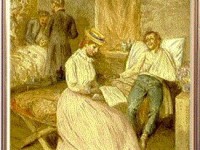
In the course of my research, I quickly discovered that women in the 1890s had more to fear from their own culture than from vampires. I read the psychiatric journals of the period, which prescribed bizarre treatments for ladies who were “hysterical,” which usually turned out to mean that they were “excitable in the presence of men.” In many instances, the desire to read all day or engage in intellectual studies, were also regarded as symptoms of mental illness in the female. Young women were committed to asylums for doing cartwheels in mixed company, for desiring sex with someone other than one’s husband, or for staring seductively at a man. Most behavior that showed spunk, spirit, or sexual need, was pathologized.

All sorts of harrowing and torturous cures were developed to “settle” these women – restraints, forced housework (to help them remember their true natures), repeated plunges in ice water, and force-feeding, to name a few. As mental illness in females was thought to originate in the womb, doctors also were obsessed with menstrual cycles, figuring that if a patient’s cycle could be regulated to a strict 28-30 day cycle, the “illness” of wanting to have sex or read books all day, would disappear. Not coincidentally, an irregular cycle was also considered a sign of mental illness and required treatment.

Curious as to whether these “cures” were actually implemented, I visited the archives of Victorian mental hospitals and read physicians’ reports from the late 1800s, often in the doctors’ own handwriting. Reading of young women committed for losing interest in housework, for lying about sexual encounters, or in one case, of a fifteen year old girl diagnosed with hysteria because she refused to stick her tongue out for the doctor’s tongue depressor, was heartbreaking.

Worse yet were the treatments, which often involved restraints to “pacify” the women. Women’s “fluttering, nervous hands” were thought to be a sign of hysteria, and the proscribed treatment was confinement – cuffs, muffs, straps, and strait jackets. Psychiatrists figured that if they could only calm the woman’s hands long enough, the patient would be soothed, hence, cured. More often than not, after prolonged periods of restraint, women’s spirits were entirely broken, at which point, they were allowed to return home. One of the most amusing anecdotes I ran across was the euphemism of “camisole” for the strait jacket because wearing it soothed a lady’s nerves in the same way that putting on a lovely garment might.

Think about that next time you slip into a bustier!

Though the Victorian era had its charms and pleasures – and I do explore those as well in Dracula in Love – it was a dangerous time to be a woman. If I were living in that era, I would surely have been committed. And I’m guessing that if you are reading this, you might have been my cellmate.

About the author: Karen Essex is the best-selling author of Dracula in Love, Leonardo’s Swans, Stealing Athena, and two acclaimed biographical novels, Kleopatra and Pharaoh. She lives and works in London and Los Angeles. To learn more about Karen’s work, please visit her website: www.karenessex.com.

Dracula in Love

Giveaway is closed.

Would you like an email notification of other drawings? Sign up for our weekly digest in the sidebar.

Mightier than the Sword

By David S. Reynolds

Mightier than the SwordIn writing my book Mightier than the Sword, which shows how Harriet Beecher Stowe’s antislavery best-seller Uncle Tom’s Cabin fueled the passions behind the Civil War, I realized just how important cultural history is.

Lincoln brought attention to the power of culture when he declared, “Public sentiment is everything…He who moulds public sentiment is greater than he who makes statutes.” He was recognizing something that is all too often forgotten by today’s historians, for whom culture often plays a distant second-fiddle to politics. We can read book after book on Lincoln the politician, his team of rivals, and the era’s political parties – or on Civil War battles or generals or soldiers. Actually, though, throughout history, cultural outliers have usually led the way, and politics and wars have followed in their wake.

Sometimes the cultural outliers are forces for destruction – the prime recent example is Al Qaeda, a tiny cultural splinter group that has controlled much of Western politics for the last decade. But sometimes, cultural outliers have identifiably good results – one thinks, for example, of Gandhi or Rosa Parks or Martin Luther King or others like them who have led directly to political change that can be called positive.

On the positive side, few cultural phenomena have swayed public opinion as powerfully as Harriet Beecher Stowe’s novel Uncle Tom’s Cabin, which was central to making America a more egalitarian nation by exposing the horrors of slavery with such vividness that Stowe became, as Lincoln reportedly said, “the little lady who made this great war.”

About the author: David S. Reynolds is a Distinguished Professor of English and American Studies at the Graduate Center of the City University of New York. His works include the award-winning Waking Giant: America in the Age of Jackson, Walt Whitman’s America, and John Brown, Abolitionist. He lives on Long Island.

Mightier than the Sword

Heat, Light, and Emilie du Châtelet

By Laurel Corona

Heat, Light, and Emilie du Châtelet

The Chateau de Cirey. Emilie du Chatelet and Voltaire set up a physics lab on the ground floor.

In 1800, when William Herschel shot a beam of sunlight through a glass prism and measured the temperature of each color of light, he noticed that the temperature increased from the violet to the red ends of the spectrum. Going further, he measured the temperature just beyond the edge of the visible red and discovered it was the hottest of all. The “calorific” rays, as he named them, behaved just like visible light without being detectable to the human eye. He had discovered infrared light.

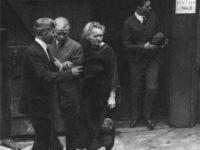
Sixty-three years earlier, Emilie du Châtelet, anonymously mailed to the French Academy of Science an essay, “Dissertation on the Nature and Propagation of Fire,” which included the idea that different colors of light carried different amounts of heat. She wrote that the way to prove this was to refract light onto a row of thermometers corresponding to the various colors in the spectrum – exactly the experiment Herschel performed.

She was unable to carry out the experiment herself for lack of thermometers. Her lover, the writer and philosopher Voltaire, was using all of their lab equipment trying to prove that fire was matter. Still thinking of herself more as his assistant than a scientist in her own right, Emilie did not insist. If she had, it’s likely Herschel’s discovery would have been made right then.

Would she have received the recognition she deserved? It’s doubtful. Voltaire himself admitted that a work on Newton published in his own name had been practically dictated by his brilliant lover.

About the author: Laurel Corona is also the author of Penelope’s Daughter, The Four Seasons, and Until Our Last Breath: A Holocaust Story of Love and Partisan Resistance. She lives in San Diego. She welcomes visitors to her website at www.laurelcorona.com.

Finding Emilie

Giveaway is closed.

Would you like an email notification of other drawings? Sign up for our weekly digest in the sidebar –>.

Becoming Americans in Paris

By Brooke L. Blower

Becoming Americans in Paris

After World War I, Americans gravitated to the bustling, traffic-snarled Opera district. The busy American Express, topped by a gigantic electric sign, appears on the far right. Mario von Bucovich, Paris. New York: Random House, 1930.

Paris certainly was a destination for American lovers in the 1920s – not least for those who wanted to break up. Each year hundreds of “wedlock-worn folks” with the money and inclination set sail for the capital to end their marriages, where divorce laws were more liberal than those of most American states. Never mind that U.S. courts warned that such decrees might not be recognized stateside, that competing statutes meant that a man might be considered divorced in Paris but still married under New York State law, or that, if he subsequently remarried, he might even be regarded as a bigamist in Connecticut. The “mismated” continued their pilgrimages anyway, and the capital’s “divorce mill” ran “full tilt.” French newspapers did not air society couples’ dirty laundry as the tabloids did in Manhattan or Chicago, and the Paris courts offered quick and discreet proceedings, expedited by American lawyer middlemen who made a fine living helping their compatriots “lift the matrimonial shackles.”

American magazines made light of this fad for divorce à la française, painting it as a story about modern-day female emancipation, since wives filed the majority of petitions. Paris appeared as a “happy hunting-ground” for soon-to-be-divorcées dreaming of the alimony they’d have to burn. The city’s ready pool of gigolos, its celebrated opportunities for retail therapy, promised to take the sting out of a failed love affair.

Yet there was something very sad about couples embarking across the ocean and setting up new residences in the world’s most romantic city, a Catholic city, and a city with more than its fair share of war widows and young women who would never have the chance to marry, all to dismantle the life they had built together. Maybe not in the late-night café haze, but in the sharp light of morning – sitting on a park bench, watching the lovers, the families shepherding their small children past – those waiting for their divorces to come through must have felt that sense of loneliness, which often clouds a stay in a foreign place.

About the author: Brooke L. Blower is assistant professor of history at Boston University and the author of Becoming Americans in Paris: Transatlantic Politics and Culture between the World Wars (Oxford, 2011).

Becoming Americans In Paris

Giveaway is closed.

Would you like an email notification of other drawings? Sign up for our weekly digest in the sidebar –>.

Fanny Kemble, 19th Century Celebrity

By Kelly O’Connor McNees

Fanny Kemble, 19th Century CelebrityMy historical novel, The Lost Summer of Louisa May Alcott, imagines a summer in Louisa’s life when she was just 22 and on the precipice of a remarkable life. In trying to understand Louisa, I investigated the books she loved and the people she admired. That’s how I learned about Fanny Kemble.

Fanny Kemble was born to a family that dominated the British stage for generations. She too was an actress a young age, and later met and married Pierce Butler while performing in the U.S. His family’s money came from cotton and rice plantations in Georgia. When he took Fanny home to the plantation, she was appalled by the realities of slavery. As a Brit, she had long opposed the institution, but seeing it with her own eyes hardened her resolve. To her husband’s great humiliation, she began to write about what she saw. The marriage dissolved, and later she published Journal of A Residence on a Georgian Plantation in 1838-1839. It caused quite a stir.

Abolitionists like Louisa’s father Bronson admired Fanny for her willingness to speak out against slavery, even as doing so disrupted her comfortable life. Louisa too opposed slavery, of course, but I speculate that she also admired and envied Fanny’s independence. The actress took back her maiden name and continued doing the work she loved, on her own terms. She enjoyed remarkable success with American audiences. It’s hard not to see Fanny Kemble’s life as a model for the life Louisa herself would make later on: a woman making her own way in the world with an uncompromising vision.

About the author: The Lost Summer of Louisa May Alcott is now available in paperback. The Washington Post says that “Devotees of Little Women will flock to this story with pleasure.” Kelly O’Connor McNees lives in Chicago and blogs at http://kellyoconnormcnees.com.

The Lost Summer of Louisa May Alcott

Giveaway is closed.

Would you like an email notification of other drawings? Sign up for our weekly digest in the sidebar –>.

How Did Women Wear Hoop Skirts?

By Ellen Horan

Ellen HoranMy novel, 31 Bond Street, explores the fate of a well-do widow with two teenage daughters, Emma Cunningham (still considered youthful and attractive in her 30′s), during a sensational trial for murder. By reading the newspapers of 1857 to research the actual case that it is based upon, I was thrust back into that era. When I immersed myself, I found that ‘day to day’ existence was rarely explained in the newspaper – as so much about contemporary life was taken for granted. One of my biggest curiosities was ‘how did women ever manage to wear hoop skirts?’

First of all, 1857 was the year flexible metal hoop was patented and came to market and it created a huge sensation. It was made of foldable loops of steel, and could collapse for storage, and then pop open with the touch of a spring. Women had been burdened with heavy skirts that were kept fashionably full with wooden hoops and layer upon layer of crinolines or horsehair, so the new hoop skirt was a modern revelation. It was a huge hit because it lightened the load. We think, from a feminist perspective, that such items were ‘suffered’ by women, burdening them and slowing them down, but hoops were hugely popular among women. They were relieved of the weight of multiple layers of petticoats and heavy crinolines and bone or wooden stays in their skirts. The metal ‘cage’ hoop seemed light and liberating by comparison. Movement became easier. Wearing a metal hoop skirt was often compared to ‘sailing’ since there was nothing underneath, and your skirt fabric was stretched around a brace, much like a sail.

Women wore hoop dresses to fancy events and parties, but also under a daytime dress known as ‘the promenade dress’ for shopping and other activities. An evening promenade was something all New Yorkers turned out for in the days before the Civil War. After work, all classes loved to link arms and walk up and down the avenues, with women showing off their hoops. During 1857, the larger the hoop, the more fashionable, the skirts became wildly elaborate and covered with follies like beading and fringe and ruffles. New synthetic dyes had recently been invented creating vivid clashing colors like purple and orange. Skirts would grow to wider and wider circumferences, often taking up 20 yards of fabric, stretched out like gigantic lampshades. Women were crazy for these latest fashion fads, and metal hoops were in huge demand, with women outside the cities anxiously awaiting new shipments.

The hoop skirt was as lampooned by men as it was embraced by women. Satiric poems and cartoons appeared in the daily newspapers, describing the danger of being toppled by a gust of wind. So how did women wear hoops? Apparently, to sit down, you needed a lot of practice – you tipped the hoop under your rear end up a bit, and sat, which gave you the right balance to perch on the edge of a chair. If you sat without doing that first, the front ballooned upwards, exposing the room to your crotch-less pantaloons. To relieve yourself, which I assume you never wanted to do in a public place, you would gather the metal hoops upwards, and strategically place yourself over a stool which held a chamber pot.

After Emma Cunningham was indicted for murder, she was no longer wearing hoops, but skirts that hung limply as she waited in jail for her trial. I believe she would have traded the bars of prison for the ‘cage’ of hoops any day. But that is another question I explored in 31 Bond Street – how did women survive the courts and prisons in 1857?

About the author: Ellen Horan was raised in Philadelphia and New York. After graduating from college, where she studied painting and history, she lived in France for a year while working as an au pair and studying studio art. She remained abroad for a second year and was offered a grant to live and paint in the South of France. She returned to New York City and worked for many years with photographers and photo agencies. She maintained an art studio and worked as a freelance photo editor for magazines and books. She turned her attention to writing after becoming intrigued by the Bond Street murder case. She lives in downtown Manhattan, the setting of her first novel, 31 Bond Street.

31 Bond Street

Giveaway is closed.

Would you like an email notification of other drawings? Sign up for our weekly digest in the sidebar –>.

The Confession of Katherine Howard

By Suzannah Dunn

The Confession of Katherine HowardKatherine Howard is the wife of Henry V111′s about whom we know the least – in all but one respect. We know absurdly little of the girl who was, for a time, Queen of England – but ironically, and sadly for her, we know more of one part of her life than perhaps we could know of our closest friends’.

We don’t know what she looked like: there are no authenticated likenesse of her. We don’t know when she was born – even approximately – meaning that we don’t know her age when she became queen nor at her execution a year and a half later.

What we do know of her, though, is what she got up to in bed with her boyfriend, Francis Dereham, when growing up in the traditional Catholic household of her step-grandmother, the Dowager Duchess of Norfolk. Because that, she confessed to her interrogators with startling candour… although I doubt she had much choice in the matter.

I don’t mean that she was physically coerced, but to an uneducated teenage girl, those men – however cautiously they proceeded -must have been gravely intimidating. By sleeping with Dereham, she’d in fact done nothing wrong: what she did before she married was her own business. The big problem was that – incredibly – this behaviour hadn’t stopped when she’d become queen. Although she always denied a sexual relationship with Thomas Culpeper, she didn’t deny their romance. It was her friends’ heartbreakingly credible testimonies, similarly under interrogation, which sealed her fate.

About the author: Suzannah Dunn is the author of ten previous novels, all of which have been critically acclaimed. She has written three historical novels: The Queen of Subtleties, The Sixth Wife and The Queen’s Sorrow.

The Confession of Katherine Howard

Giveaway is closed.

Would you like an email notification of other drawings? Sign up for our weekly digest in the sidebar –>.

Linking the Past and the Present

By Sue Macy

Elsa von Blumen

Elsa von Blumen poses for a picture on her bicycle. During a race in 1889, the Pittsburg Dispatch reported, "Miss von Blumen's style is to a great extent very laborious, but when she leans forward for a spurt her bicycle seems to fly around the track." (p. 60)

In April 2010 I found myself at an auction house that was packed with old bicycles. There were Schwinns from the 1950s and 60s, but they were in the minority, and they were the new kids on the block. More numerous were the really old models, the high-wheelers from the 1880s and the even older velocipedes, built in the 1860s before bicycles had pedals. I watched in awe as collectors and aficionados bid one, two, even three thousand dollars for the chance to take home one of these antique gems.

I was there for the small-ticket items, the photographs, postcards, and pins and medals I needed to supplement the images and ephemera that I already had found for my book, Wheels of Change: How Women Rode the Bicycle to Freedom (With a Few Flat Tires Along the Way). Though I never had bid at an auction before, I quickly caught the competitive spirit and came away with seven prized lots, including a century medal (awarded for riding 100 miles in one outing) and two photographs that made it into the book. I also came away convinced that my book, which focuses on the bicycle craze of the 1880s and 1890s, is particularly relevant today. The ancient bicycles at the auction were the physical manifestation of a time when cycling came to be valued as a healthy, enjoyable, and efficient way to get where you were going. Modern technology has enabled us to produce lighter, faster bikes, but like the models of old, they have the potential to liberate us from the costs, both financial and ecological, of our era’s more dominant modes of transportation. While the auction attendees clamored to own a piece of the past, they were also making a statement about the living legacy of one of the most reliable and enduring inventions of the industrial age.

About the author: Sue Macy majored in history at Princeton University and spent 23 years as an editor and editorial director of children’s magazines before leaving to write nonfiction books on sports and women’s history. She lives in Englewood, New Jersey, just a few hours drive from the site of the Copake Auction, described above. This year’s bicycle auction is scheduled for April 16.

Wheels of Change

Giveaway is closed.

Would you like an email notification of other drawings? Sign up for our giveaway email list by clicking here.

IMAGES ARE FOR YOUR ONE-TIME EXCLUSIVE USE ONLY AS A TIE-IN WITH THE NATIONAL GEOGRAPHIC BOOK “WHEELS OF CHANGE.” NO SALES, NO TRANSFERS.

Cover: ©National Geographic
Photo: Collection of the Author

Exit the Actress

By Priya Parmar

The Ladies DictionaryLong before Nell Gwyn was the subject of gossip columns and newspaper articles, she would most likely have been one of the many young London girls who eagerly read up on health and beauty tips, helpful dating hints and celebrity fashion advice. Newspapers, journals, handbooks and medical books did a roaring trade handing out practical prescriptions for freckle cures, virility pills, energy drinks, and suggestions for how to meet and keep the right man. Some of it was scientifically based. One medical journal advised: rubbing ointment made from dried bees on the afflicted area to cure baldness, or for major wounds: dip finger in the blood of the wound and write the victims own name on his chest to ensure a speedy recovery.

Beauty advice was always popular. To target cellulite a woman should heat and mix: goose grease, oil of lily, chicken fat, resin, pine pitch, turpentine and wax and then allow to cool before applying the smelly stuff to the problem area. To find the perfect decorative patch for the shape of your face one had to be sure to choose a suitably proportioned image. Lady Barbara Castlemaine wore a blue, cut out, patch of a coach and four riding across her cheek; one had to have the right shaped face to carry that off. A lean and muscular body for a woman was considered unfortunate and if a woman was afflicted with such a figure, she was advised to rest and eat as much as possible to achieve a fuller and more desirable shape.

The Ladies Dictionary is specific on the subject of dating: “Is it proper for a woman to yield at the first address, though to a man she loves?” Absolutely not. He will like you better if you hold out. Should a woman wear make up? Never, as it will “destroy the reputation” of the wearer. It would also most likely destroy the face as cosmetics were often lead based.

Superstition was also a subject. You do not want to encounter a shaggy dog, a rough footed hen or a black cat early in the morning as it is a sign of death. A hare crossing your path in the high way is ill luck but if your left cheek burns, someone, somewhere is saying something nice about you. If you dream of eggs or fire it is bad luck but if you dream of the devil, it is good luck. If your right palm itches, you will shortly be receiving money but if you give knives to your sweetheart, it will sever the love between you…

About the author: Priya Parmar, a former dramaturg and freelance editor, holds degrees in English Literature and theatre. She attended Mount Holyoke College, Oxford University, and is currently a doctoral candidate at the University of Edinburgh. She divides her time between Hawaii and London. Visit her online at PriyaParmar.com.

Exit the Actress

Giveaway is closed.

Would you like an email notification of other drawings? Sign up for our giveaway email list by clicking here.

Image Credit

Livia, Empress of Rome

By Matthew Dennison

LiviaMythology engulfs Livia. Elevated to the rank of goddess within a generation of her death, this woman once accounted a paragon among Roman wives has been more effectively fictionalized that the pagan gods whose pantheon she joined. Her name is no longer a byword for wifely piety. Today she is a schemer…a villianness…a murderess. She has no defense. Her crime is ambition.

Ironically Livia owes her dehumanization to motherhood. Ancient Rome adopted a throwaway approach to single women. Devoted wives and mothers were the pride of the Roman Republic, their self-abnegation their only crown. In Rome, virtuous mothers transmitted a blueprint of good behaviour to successive generations of virtuous men. They conceived desires of their own at their peril.

So what of Livia? Why must the wife of Rome’s greatest emperor, Augustus, suffer the slings and arrows of outrageous fortune? The answer, of course, lies in part with her son.

Few rulers have done less to curry favour with the masses than the Emperor Tiberius. Two thousand years ago, as today, unhappy multitudes demanded a scapegoat for their suffering. Augustus could not have cursed Rome with so joyless a ruler of his own volition. Surely, for her own ends, Tiberius’s mother brokered the deal which forced a generation of Romans into tyrannous misery?

To Rome’s mostly male readership, it was a plausible argument. Today we can look afresh at a woman whose reputation was tarnished not by her own hand but those of later commentators sick with fear at that most exciting prospect – a powerful woman.

About the author: Matthew Dennison is the author of The Last Princess. A journalist, he contributes to The Times, The Daily Telegraph, Country Life, and The Spectator. He is married and lives in London and North Wales.

Livia, Empress of Rome

Giveaway is closed.

Would you like an email notification of other drawings? Sign up for our giveaway email list by clicking here.

Image Credit: ancienthistory.about.com