Category Archives: Tracy Barrett

Medieval Metafiction

by Tracy Barrett, W&M contributor

In 1924, the linguist Luigi Schiapparelli discovered some lines in the margin of a religious text, scribbled in a Veronese hand in the late eighth or early ninth century, probably to test the scribe’s newly cut pen. They read:

Se pareba boves                           He led oxen
alba pratalia araba                    he plowed white fields
& albo versorio teneba               and he held a white plow
& negro semen seminaba          and sowed black seed

Linguists immediately declared this one of the earliest examples of written Italian—so early that some call it late Latin, and not Italian at all.

In 1924, Italy was at the height of its fascist era, when the peninsula’s glorious past was being held up as a model for the Italian people. Italian scholars rhapsodized about the hearty farmer who is eager to plow his field despite the frost covering it. (The white plow was glossed over.)

It wasn’t until a linguistics professor was discussing these lines in a class that a young student told him that the text wasn’t a poem about a virtuous farmer at all, but was a riddle that her grandmother had told her. The oxen are fingers, the white fields are paper (or parchment), the white plow is a white quill pen, and the seeds are the ink.

Lately, I’ve been pondering metafiction—that literary convention where an author reminds you that you’re reading a book. It’s usually considered a sophisticated postmodern technique, but it’s prevalent in children’s literature, for example in the recent It’s a Book and The Neverending Story. You might have noticed metafiction in Jane Eyre (“Reader, I married him”), Don Quixote (where the second part reflects on the first part), The Brief Wondrous Life of Oscar Wao, many books by Italo Calvino.

Isn’t it wonderful that at the dawn of Italian language, whose literature has always pushed the envelope of literary styling, a scribe testing his new pen left us this self-referential scribble?


Captain Kirk to the bridge, please

by Tracy Barrett, W&M contributor


On Star Trek (and by this, children, I mean the real Star Trek—the one captained by James T. Kirk, and with cheesy special effects and constant violation of the Prime Directive), a lot of strange things happen (I’m referring to the strange things that the producers intended to happen, not the accidental ones). The audience has to understand these strange things to make sense of the story. But there are no footnotes in a television show, and a voice-over to explain what’s going on would be even more intrusive than mid-60’s hairstyles and encounters with space-hippies.

So how to explain?

Enter Captain Kirk. He’s got the smarts to run a spaceship but doesn’t know a whole lot about the new lives and new civilizations that he encounters. Luckily, he has Mr. Spock, who patiently explains and theorizes about these mysteries to his captain, and hence to the audience. Kirk isn’t stupid—he’s just a military man whose interests lie elsewhere.

Writers of historical fiction face a similar problem. My Princess Anna of Anna of Byzantium wouldn’t think, “Wow, the palace I live in is huge!” But I want my readers to know that it is. Ariadne of Dark of the Moon wouldn’t question the human sacrifice that her religion demands every spring. But I want my reader to picture Anna in a huge palace, and Ariadne being a prime player in the sacrifice. So they need someone to explain to: a slave from a distant part of the empire in the first case, Prince Theseus in the second.

It’s been said that there are only two plots: A stranger comes to town, and Someone takes a journey (some have said that this is really one plot, but from two points of view). I doubt that this is true, but the device is a common one. I wonder if the need for a stranger in town is so the person whose POV informs the story can either explain things to the stranger or be the one who receives an explanation.

Emotional truth

By Tracy Barrett, W & M Contributor

One factor that draws many people to historical fiction—and Civil War reenactments, the Society for Medieval Anachronism, Renaissance Faires, etc.—is curiosity about how it felt to live at a different time. I share this curiosity; I love to be so immersed in a former time that I’m startled to look up from a book’s pages and find myself in the twenty-first century. I first experienced this when reading Lucile Morrison’s The Lost Queen of Egypt, and then with Sigrid Undset’s Kristin Lavransdatter and Robert Graves’ I, Claudius.

Part of my fascination is the evocation of the time—the houses the characters lived in, the food they ate, the clothes they wore, the games they played. But what really draws me in is the feeling that I’m sharing the characters’ emotions.

Avoiding anachronism in emotion is one of an author’s most difficult feats. How, we wonder, could parents of the past have survived the death of one-third of their children? How could a teenager have accepted without question that she was to marry a man many years her senior, who had been chosen for her by someone else? If the character is horrified, we’re not being true to the time. But if we present a child’s death or an arranged marriage to an unpleasant old man matter-of-factly, we risk jarring the reader at our character’s perceived callousness.

I try to come up with a situation analogous to one today and have my characters react appropriately for that. For example, until modern medicine improved infant mortality rates, parents might react to the death of a child the way most Western people would react to the death of a pet: you’d be sad, you’d probably cry, you’d tell your friends, you’d never forget that pet, you might keep its collar in a special place—but you would move on, in a way that the parent of a dead child could rarely manage to do today.

I think of an arranged marriage as being similar to having parents choose a teenager’s high school. The teen might have some say, and if she really, really hated the idea of a particular school and another one was available, the parents might yield to her wishes. But they might not, and that wouldn’t be child abuse.

Here’s how I handled my main character’s reaction in my work in progress to hearing that an acquaintance had lost her husband and children to an illness several years earlier. She thinks: “Not unusual, but sad nonetheless. No wonder the woman had an air of bitterness about her.” I hope that reminds my reader that this kind of loss was common, while preserving my narrator’s humanity.

Who “Owns” a Story?

BarrettTracyRT

By Tracy Barrett, W & M Contributor

I occasionally get questions from readers of my historical fiction asking why I deviated from the real story of the Minotaur or the Odyssey. By “the real story,” what they mean is a familiar telling. But the version that my questioners think is the authentic tale is just one in a long line of tellings of a myth or legend, and my books are merely the most recent addition to that line.

Myths were told orally, most of them for centuries, before someone wrote them down. What that writer set down on paper (or clay, or parchment) was only one version, neither more nor less authentic than any other version that either didn’t get written down or whose written form has been lost. Usually the same basic story elements persist from one telling to another, but sometimes they are drastically altered. Look, for example, at three different (ancient) endings to the Odyssey, all found in ancient written sources of equal “authenticity”:

  • Odysseus ruled in Ithaca until the end of his days
  • being sick of the sea, he walked inland until someone didn’t recognize the oar over his shoulder and asked, “What are you doing with that winnowing-fan?”
  • he sailed through the Straits of Gibraltar and never returned

or the two descriptions of Ariadne’s fate after she was abandoned on the island of Naxos by Theseus after he killed her brother, the Minotaur:

  • she hanged herself
  • she married Dionysus/Bacchus and became immortal

or three levels of Helen’s culpability in the Trojan War:

  • she went willingly to Troy with Paris
  • she  was abducted by Paris and went to Troy against her will
  • she hid out virtuously in Egypt, while a phantom double went to Troy.

If the ancients didn’t find one version more true, more original than the others, why do modern readers?

In my young-adult novel King of Ithaka, Telemachos is indignant that bards change the details of stories. He is told, “Nobody expects a poet to tell the truth. It’s a better story this way.” This is even more true when a writer is retelling story that was fictional to begin with. What “authentic” story am I deviating from if I create a centaur sidekick for Telemachos, if I have Ariadne choose willingly to stay on Naxos, if my Minotaur in Dark of the Moon is no monster but a horribly deformed man? I’m not changing the “real” story. I’m making a new one, just as the other tellers before me have done.

Contributor Q&A: Tracy Barrett

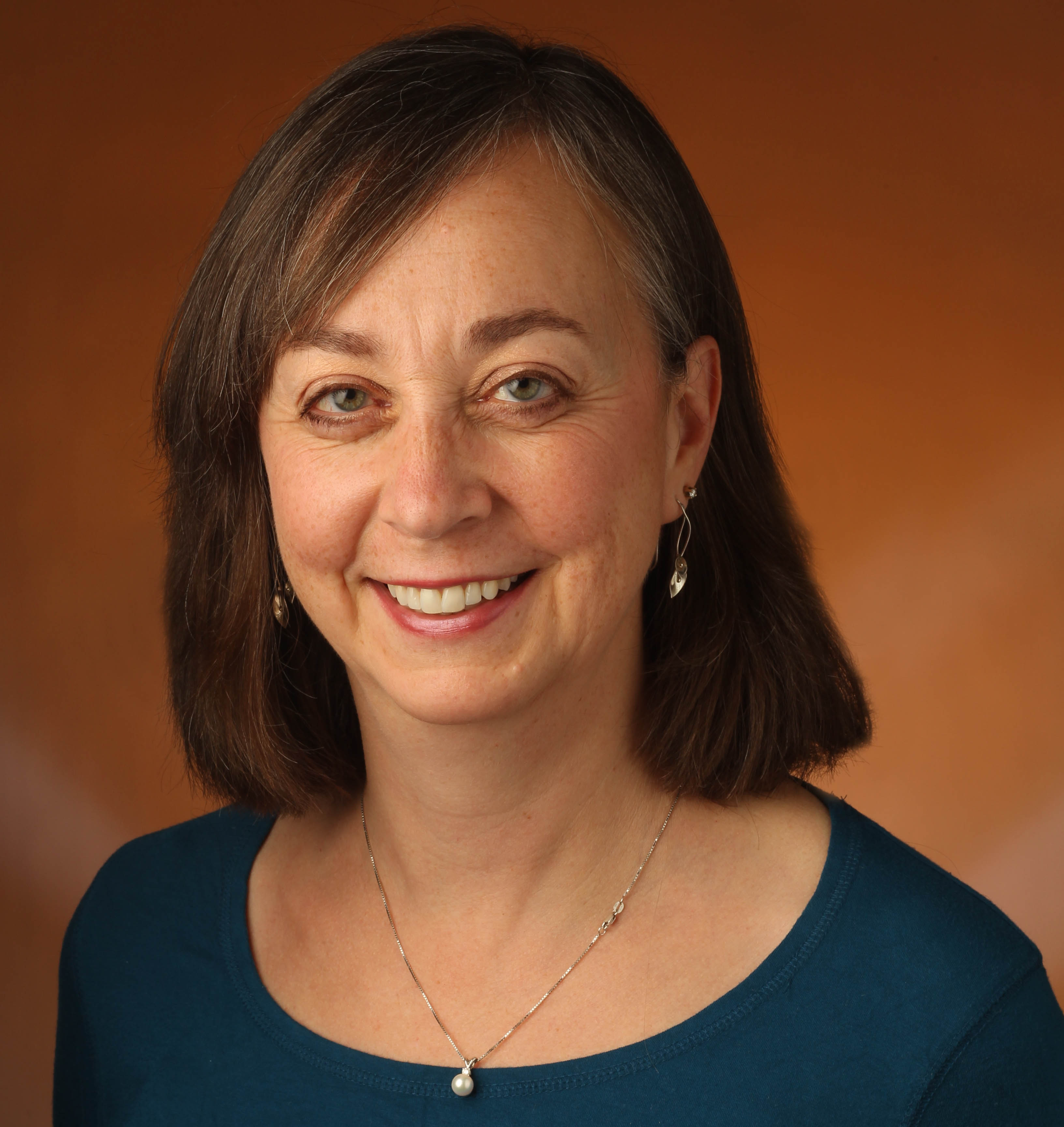
Another in our series of introductions of new contributors to Wonders & Marvels: introducing Tracy Barrett, award-winning author of books for young readers, both fiction and non-fiction. Lately she has been concentrating on young-adult fiction set in the ancient Mediterranean.

Q: You have an A.B. in Classics from Brown University and a Ph.D. in Medieval Italian literature from U.C. Berkeley, you teach Italian at Vanderbilt University, and you’re also an award-winning author. Could you tell us a little bit about your career trajectory? How have these two seemingly different lives intersected?

A: Actually, there are many similarities! My favorite activity is poking around dusty old books that nobody else has looked at since 1951, finding an intriguing fact that makes the past come alive, and communicating that fact to a receptive audience. That’s what I did when I investigated the medieval poet Cecco Angiolieri for my dissertation, and that’s what I do now when I find out something about Bronze Age Crete to round out a character in a novel.

Q: Of the many books you’ve written, which one has been the most interesting to write?

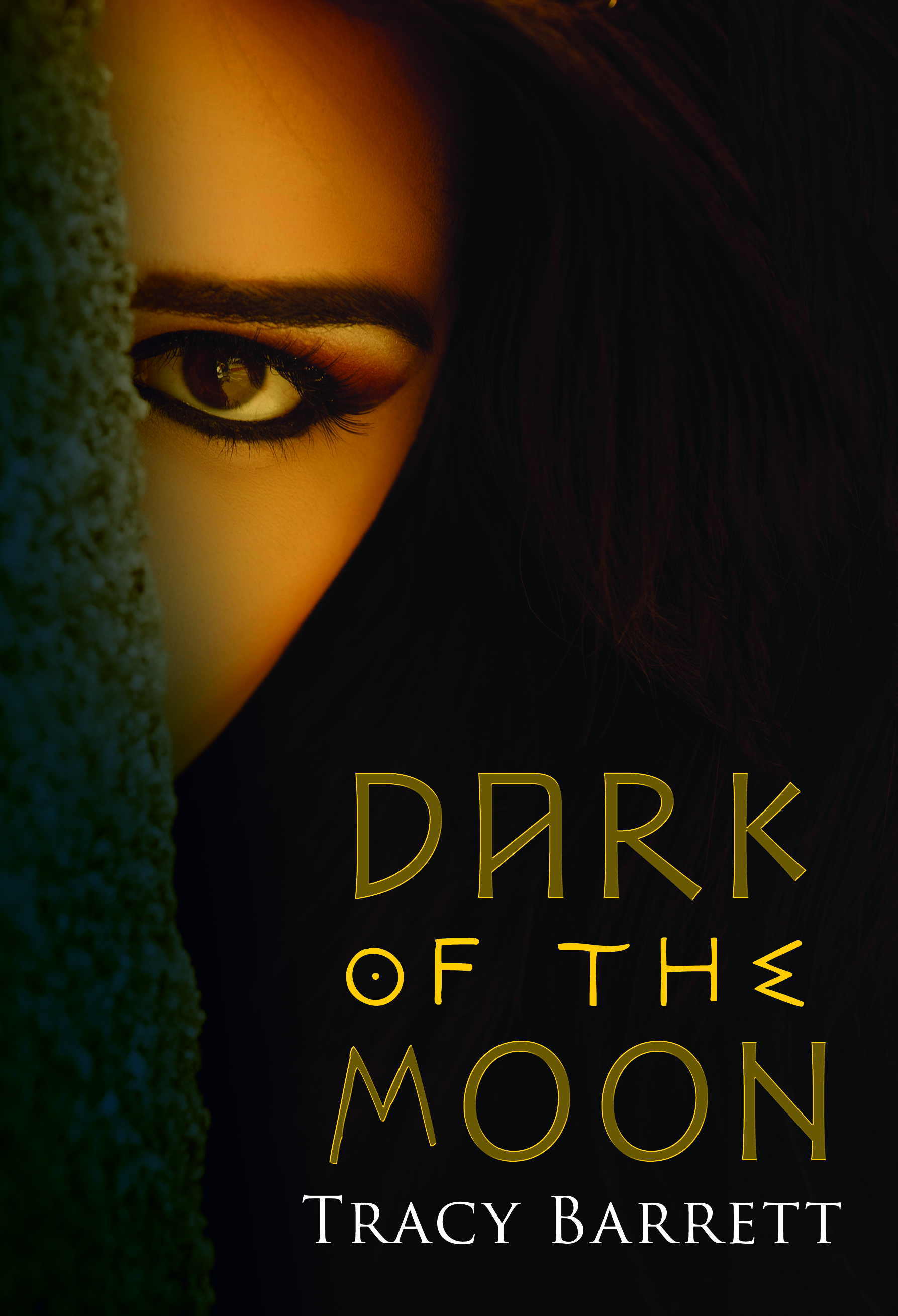
A: Like most authors, I usually find my most recent book the most interesting, so for me, that would be Dark of the Moon, releasing—ta-da!—tomorrow! It’s a retelling of the myth of the Minotaur, which is itself a Greek retelling (or misunderstanding) of now-lost Cretan rituals, most likely concerning the worship of a bull-god, whose priest might have worn a bull costume during rituals. It’s possible that Greek travelers garbled the story and came up with the marvelous tale of the Minotaur, a half-man, half-bull who devoured human children. Their inaccurate but exciting retelling gave the world one of its most popular myths.

In my imagined Minoan civilization, Crete is ruled by a moon goddess and Asterion is no monster, but a deformed and nearly mindless man who has to be confined under the palace for his own and others’ safety. Everyone is terrified of him except his beloved sister Ariadne, and eventually, Prince Theseus of Athens, who has been sent to kill him.

Told in alternating points of view by Ariadne, a lonely teenager who is also priestess of the moon, and Theseus, who has rediscovered his father only to be sent by him to almost certain death, Dark of the Moon explores the issues of love, faith, and betrayal. Ariadne must decide what her obligations are toward her heritage and her religion. Theseus must discover how much he owes his absent father, his neglectful mother, and his kind stepfather. It’s been getting some great reviews, including a star from Kirkus Reviews.

I’d love to share the book with you! I’ll send signed (or unsigned, if you prefer) copies to two people who comment on this post over the next week.

Q: You’re “retiring” from Vanderbilt at the end of this year to focus on your fiction writing. How will you start transitioning to life as a full-time teacher to life as a full-time writer?

A: I’m weaning myself from teaching and amping up my writing while not shortchanging my students and colleagues at Vanderbilt, which means that I’m working at one or the other job pretty much all the time. Life will be difficult for the next seven months, but I care a lot about both teaching and writing too much to want to do less than my best at either one.

I’m blogging about my last year at Vanderbilt at Goodbye, Day Job!. Guest posts alternate with my own posts about preparing to leave a “regular” job with a paycheck, benefits, social contacts, and interesting coworkers (I’m including my students in that group!) for the uncertain world of working for myself. A new post every Wednesday!

Q: I know that you’re deeply connected to the YA writer community. What are the benefits of engaging with author writers? And what’s the best way for a new author to reach out to others?

A: You’re asking this at a very good time. I just spent the weekend at the annual conference of the Midsouth (Tennessee/Kentucky) chapter of the Society of Children’s Book Writers and Illustrators, a 22,000-member international organization. As always, the conference was stimulating and educational, but above all a wonderful networking opportunity. Children’s writers are the most generous and interesting people I’ve ever met, and I’m thrilled that I’ll be able to spend more time with them. You don’t have to be published to join, so if this is something that interests you, I highly recommend that you join.

Q: Inquiring minds want to know. What do you have in the works? What can we look forward to?

A: I’m working on a YA manuscript set in the Roman Empire. It’s still too new and fragile to talk about, but it involves an Etruscan slave girl, a mysterious prophecy, a guilty secret, murder, love, teen angst—I’ll share more when I think it’s sturdy enough to bear a little scrutiny without bruising!

I look forward to posting here on the 20th of every month on all aspects of young-adult historical fiction.