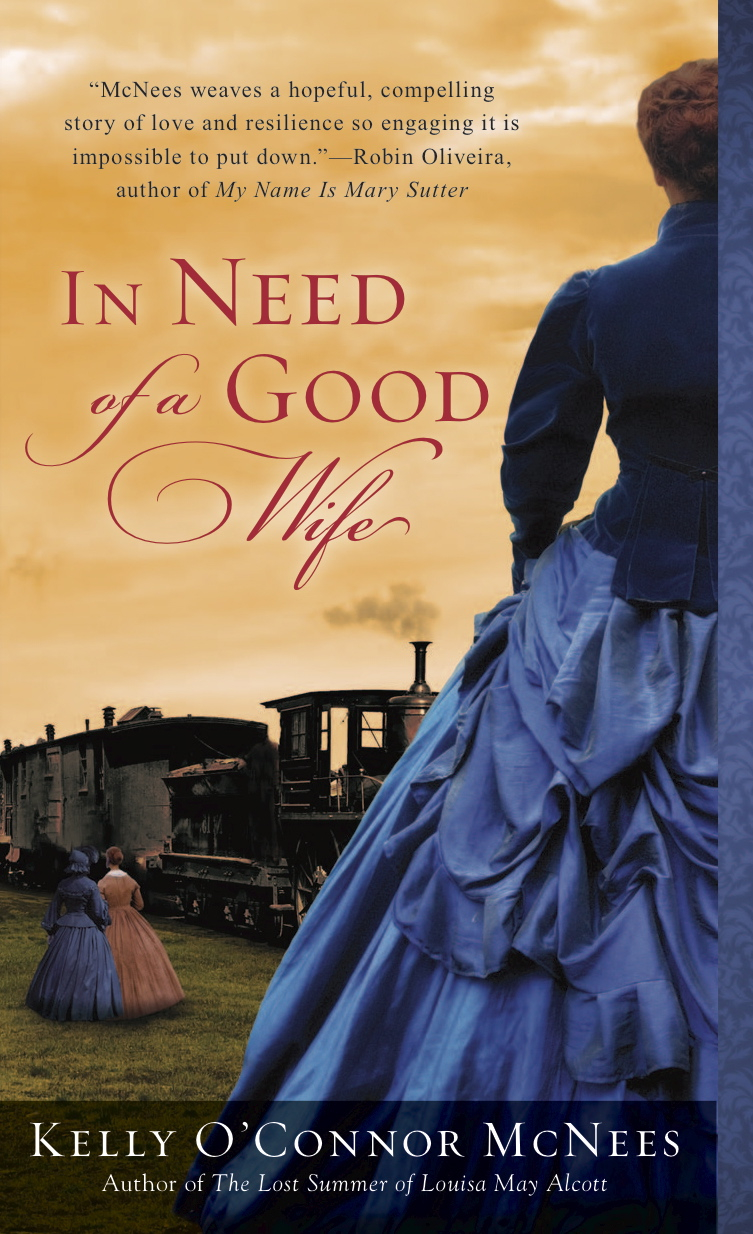
Superficially, she was a classic Memsahib- the literal translation means wife of the Sahib, the master. She’d gone to India, aged eighteen, as a member of the Fishing Fleet, the slightly derogatory name given to the English girls who went to India for the social season in search of husbands.
I loved everything about her: the battered tweeds, the honking laugh, the wonderful stories about India: the snakes under the bath, the tiger hunts with Maharajahs, the three day treks on ponies up to Simla. I dressed up in tiny silk saris, spice-scented tunics and salwar kameeze, produced from her mother of pearl trunk.
Four years ago, I met her nephew. He had a box of tape recordings made by her. Listening to these tapes as an adult made me realize that the India that had given her pleasure had taken in equal measure. My childhood heroine spoke on the tapes of the agony of missing children sent home to be educated.
“It was the biggest decision we all had to make: husband or child.” Passionately fond of nursing- she’d served with distinction in France in 1917- in India, she was only allowed to run a few village clinics- working Memsahib were frowned on.
Other women of the Raj spoke to me of botched births in remote areas, of burying young children, of flies and heat and snakes, of runaway or workaholic husbands, of terrible homesickness.
Because the British suffer from post- colonial guilt the Memsahib is often portrayed in literature or films as a gin swilling, narrow-minded snob. Some, of course, deserve our contempt; many didn’t. It’s easy to forget how young and ill prepared and uneducated many of these women were.
East of the Sun is my raised glass to these women: to their friendships, their naiveté, to the men they loved, to the work they did, and for the price they paid in loving India.
![]()
Macy Halford posted a great review of The Good Wife’s Guide on the New Yorker’s Book Bench website. Translated by Gina L. Greco and Christine M. Rose, The Good Wife’s Guide is a fourteenth-century instruction book for a young bride, written by her husband. It’s a primer on the fine art of male dominence.
The dinner menu the husband offers up goes to prove that real men did not eat quiche in the Middle Ages. Green eel soup or black hare stew, anyone?
As the 17th century specialist that I am, the book reminded me–of course–of Moliere’s Arnolphe in The School for Wives. The wiley Arnolphe offers up a list of “maxims” for his young bride, whom he plucked from a convent. Of course, in the great Moliere tradition, the canny Agnes ends up showing what a nut job her husband really is.
Maxim 1. The woman who intends to be married ought to remember, that the man who takes her, takes her only for himself, notwithstanding the vast numbers of admirers which other women have in these our days.
Maxim 2. She ought to consult her husband about her dress; it being for him along should she take care of her beauty, and regardless whether other people think her handsome or not.
Maxim 3. She must lay aside the practice of ogling, and must use no paints, pomatums, beauty washes, nor the numberless ingredients that are made use of to set off the complexion. These are always mortal poisons to honour, and the pains bestowed to appear beautiful are seldom for the husband’s sake.
Maxim 4. When she goes abroad, she ought, as honour requires, to prevent the wounds her eyes might give, by concealing them under her hood: for she should study to please her husband, and no one else.
Maxim 5. Decency prohibits her from receiving any friends whatever, except such as come to see her husband: those people of gallantry that have no business but with the wife, are very disagreeable to the husband.
There are five more maxims. But you get the point…oh, the things history has done to quiet women.
You might want to head over to a post on Silence and the Scold’s Bridle. Miranda Garno Nesler offers some details about the muzzles that were used to restrain women’s speech in the Renaissance.
Wendy Moore also explores 18th Century Domestic Violence.
More things change, the more they stay the same. Regrettably.
Wife-beating was both widely tolerated and sanctioned by law in 18th-century England. Yet the ordeal suffered by Mary Eleanor Bowes, Countess of Strathmore, at the hands of her husband so shocked Georgian sensibilities that she not only won landmark legal battles but her husband was banished to prison.
Marital violence is as old as marriage itself. In Georgian England, husbands were legally entitled to strike their wives in order to ‘correct’ their conduct so long as moderation was the watchword. One judge, Francis Buller, even went so far as to specify that a husband could beat his wife with a stick so long as it was no thicker than his thumb, earning himself the nickname ‘Judge Thumb’ in satirical prints for his wisdom.
But even when domestic abuse far exceeded such nice distinctions, wives enjoyed little recourse to the law. The torment endured by Mary Eleanor Bowes was among the most extreme.
A wealthy young widow, Mary was tricked in 1777 into marrying an Irish fortune-hunter, Andrew Robinson Stoney, who faked a duel to win her hand. Squandering her wealth, Stoney – who changed his name to Bowes – beat Mary with sticks, whips and candlesticks, tore out her hair, burned her face and threatened her with knives.
Terrified for her life, after eight years of torture Mary fled the marital home and embarked on audacious legal suits to win a divorce, reclaim her fortune and obtain custody of her children. Her divorce case in the church courts on grounds of adultery and cruelty, backed by courageous eye-witness accounts from servants, was one of only a handful of successful cases initiated by women when first resolved in 1786.
But her ordeal was far from over. Horrified that he might lose his fortune, her husband kidnapped Mary from a London street in a desperate bid to force her to rescind her case. Dragging her across snow-covered moors, Bowes threatened Mary with a pistol and with rape. Eventually rescued after eight days, Mary went on to win her divorce through two appeal stages as well as reclaiming her property and her children, while Bowes spent the rest of his life in jail for what The Times described as ‘a detail of barbarity that shocks humanity and outrages civilisation’.
When Mary died, in 1800, she asked for the blindfolded figure of Justice to stand guard at her tomb. But it would be nearly another century before women earned even minimal protection against abusive husbands.
Wendy Moore is author of Wedlock: The True Story of the Disastrous Marriage and Remarkable Divorce of Mary Eleanor Bowes, Countess of Strathmore and The Knife Man: Blood, Body Snatching, and the Birth of Modern Surgery.
Further reading
Wendy Moore, Wedlock: The True Story of the Disastrous Marriage and Remarkable Divorce of Mary Eleanor Bowes, Countess of Strathmore (Crown, 2009).
Jennifer Ramkalawon, Love and Marriage (British Museum Press, 2009).
Elizabeth Foyster, Marital Violence (Cambridge University Press, 2009).
Image: “Judge Thumb or, Patent Sticks for Family Correction: Warranted Lawful!” (1782) Courtesy of the British Museum.
This week’s Book of the Week is Wendy Moore’s WEDLOCK: The True Story of the Disastrous Marriage and Remarkable Divorce of Mary Eleanor Bowes, Countess of Strathmore.
I have to concur with the praise it received in a recent UK review: “This splendid book, well researched and richly detailed, is as gripping as a novel.” Review in the Telegraph
Writing is a challenge, no doubt about it. But writing smart nonfiction and crafting it in ways that make it a page turner is incredibly difficult. WEDLOCK rises to the challenge marvelously. Wendy’s work does not disappoint.
On top of it, Mary Eleanor Bowes is such a fascinating character. She was a target for strong opinion during her day. In the illustration above, she is shown suckling kittens on the grounds that she was allegedly more fond of her cats than her sons. The cartoon was almost certainly commissioned by her estranged husband, Andrew Robinson Bowes. Now that’s a complicated marriage alright!
I also highly recommend Wendy’s first book: The Knife Man: Blood, Body Snatching, and the Birth of Modern Surgery.

Up this week: Beverly Swerling’s City of God: A Novel of Passion and Wonder in Old New York.
Beverly’s novels are spell-binding journeys into an era rich in history and intrigue. For a flavor of her work, take a peek at her latest book trailer. (Yes, there are such things as book trailers now!) This novel, in particular, caught my eye because of its many references to medical life in the 19th century. My guess that many Marvels & Tales readers will enjoy it!