Category Archives: Crime

Galileo Goes to Jail

By Holly Tucker

There are some books that are just too good not to mention. Galileo Goes To Jail and Other Myths About Science and Religion, edited by Ronald L. Numbers, is one of them.

Just out from Harvard University Press, Galileo tackles some of the enduring legends in the history of science.

The book debunks 25 myths in all–and the short chapters are written by top scholars in the history of science, medicine, and religion. This is one of those brilliant books that appeals to folks outside of the halls of academe, while also showcasing the talent within it.

For folks trying to separate fact from fiction, Galileo Goes to Jail is one very enjoyable and informative read.

18th Century Domestic Violence

By Wendy Moore

Wife-beating was both widely tolerated and sanctioned by law in 18th-century England. Yet the ordeal suffered by Mary Eleanor Bowes, Countess of Strathmore, at the hands of her husband so shocked Georgian sensibilities that she not only won landmark legal battles but her husband was banished to prison.

Marital violence is as old as marriage itself. In Georgian England, husbands were legally entitled to strike their wives in order to ‘correct’ their conduct so long as moderation was the watchword. One judge, Francis Buller, even went so far as to specify that a husband could beat his wife with a stick so long as it was no thicker than his thumb, earning himself the nickname ‘Judge Thumb’ in satirical prints for his wisdom.

But even when domestic abuse far exceeded such nice distinctions, wives enjoyed little recourse to the law. The torment endured by Mary Eleanor Bowes was among the most extreme.

A wealthy young widow, Mary was tricked in 1777 into marrying an Irish fortune-hunter, Andrew Robinson Stoney, who faked a duel to win her hand. Squandering her wealth, Stoney – who changed his name to Bowes – beat Mary with sticks, whips and candlesticks, tore out her hair, burned her face and threatened her with knives.

Terrified for her life, after eight years of torture Mary fled the marital home and embarked on audacious legal suits to win a divorce, reclaim her fortune and obtain custody of her children. Her divorce case in the church courts on grounds of adultery and cruelty, backed by courageous eye-witness accounts from servants, was one of only a handful of successful cases initiated by women when first resolved in 1786.

But her ordeal was far from over. Horrified that he might lose his fortune, her husband kidnapped Mary from a London street in a desperate bid to force her to rescind her case. Dragging her across snow-covered moors, Bowes threatened Mary with a pistol and with rape. Eventually rescued after eight days, Mary went on to win her divorce through two appeal stages as well as reclaiming her property and her children, while Bowes spent the rest of his life in jail for what The Times described as ‘a detail of barbarity that shocks humanity and outrages civilisation’.

When Mary died, in 1800, she asked for the blindfolded figure of Justice to stand guard at her tomb. But it would be nearly another century before women earned even minimal protection against abusive husbands.

Wendy Moore is author of Wedlock: The True Story of the Disastrous Marriage and Remarkable Divorce of Mary Eleanor Bowes, Countess of Strathmore and The Knife Man: Blood, Body Snatching, and the Birth of Modern Surgery.

Further reading
Wendy Moore, Wedlock: The True Story of the Disastrous Marriage and Remarkable Divorce of Mary Eleanor Bowes, Countess of Strathmore (Crown, 2009).
Jennifer Ramkalawon, Love and Marriage (British Museum Press, 2009).
Elizabeth Foyster, Marital Violence (Cambridge University Press, 2009).

Image: “Judge Thumb or, Patent Sticks for Family Correction: Warranted Lawful!” (1782) Courtesy of the British Museum.

Murder in a 17th Century German Village

By Tom Robisheaux, Ph.D. (History, Duke University)

From start to finish The Last Witch of Langenburg is high drama full of surprises. Where the pictures we have of most women accused of witchcraft give us only sketchy views of their lives The Last Witch of Langenburg offers a rich picture of a woman and family whose struggles became the pivot of one of the last small witch panics in Europe. The story reveals the terror of witchcraft as the offer of a gift triggered a panic that quickly spread throughout the village and out to the surrounding area.

The tale of Anna Elisabeth Schmieg—the last woman prosecuted for witchcraft in this region of the German lands—does not offer comfortable clichés about witchcraft and witch trials, however. The story unfolds from the vantage point of all of those touched by the events: village women, farmers and workers, surgeons, physicians, petty government officials, the territory’s chief minister, a prince struggling to return the land to order after a long war, as well as prominent university jurists and physicians drawn into the drama. Here witchcraft is shown to mean many things to many different people. Along the way we learn how seemingly disconnected things—Shrove cakes, medical autopsies, poison, mandrake roots, legal reform, torture, secrets between a mother and daughter, and the threat of a distant war—all come together to reveal a cosmic drama of good against evil. This is a story of what it was like to experience witchcraft.

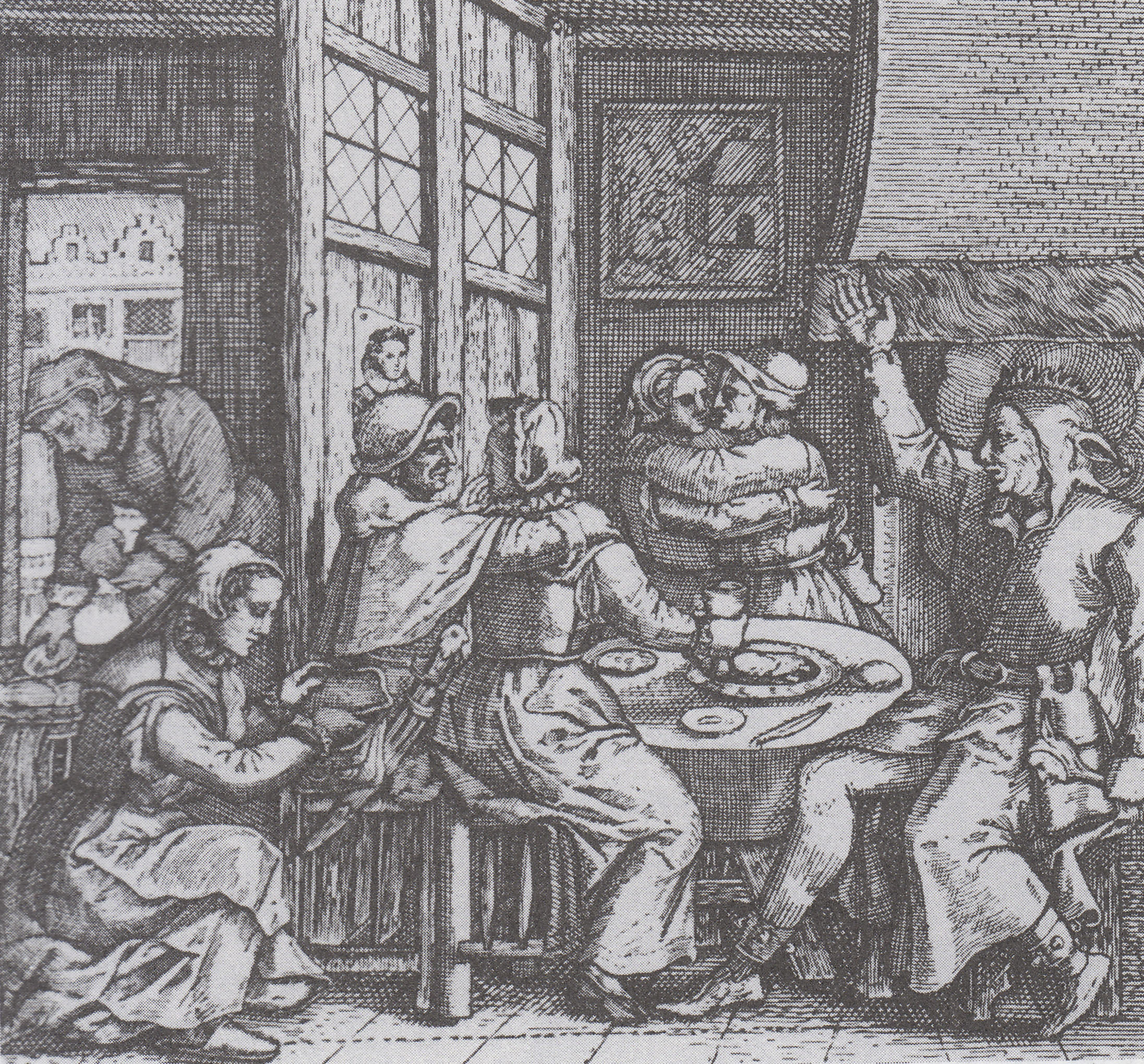
[To read reviews of Tom Robisheaux's latest, click here. By the way, the image above depicts an early-modern imagination of a Witches Sabbath. Look carefully and you'll be able to find the demonic bat-like figure that the publisher used for the book! HT]

The Last Witch of Lagenburg


By Holly Tucker

We’re certainly on a Witch Kick latelyso imagine my delight when I came across this new title by Thomas Robisheaux, a professor at Duke.

The Last Witch of Lagenburg: Murder in a German Village hit the stores last week and has already met with rave reviews.

Kathleen Kent, author of The Heretic’s Daughter and recent guest here at Wonders & Marvels, offers up this glowing assessment:

“A fascinating study of an accused witch, combining detailed historical research with the timeless and tragic story of an outspoken woman brought to a horrific end through superstitious dread. Professor Robisheaux brings the pacing and emotional pitch of a novel to an impressive recounting of trial documentation.”

Booklist gave it thumbs up (or should that be brooms up?) with praise that would make any historian blush:

By 1672, Count Heinrich Friedrich of Langenburg had restored order and prosperity to his southwest German domain, which had been ravaged by the Thirty Years’ War. But a threat arose when a healthy young mother died suddenly, and suspicions fell on Anna Schmieg, a miller’s wife. Capitalizing on the meticulous record of Schmieg’s case, historian Robisheaux not only re-creates who Anna Schmieg was but also explores the confluence of social, legal, and religious streams that put her life in jeopardy. In literary terms, Robisheaux writes a courtroom drama that will hook readers and secure their attention until the last page….With an incisive ability to view matters through the participants’ eyes, Robisheaux vividly brings this historical incident to life.”

Take one historian, mix up a good tale from the 17th century, throw in a witch, a little murder, a court case, and a writerly spell or two…and you have our Book of the Week pick.

Image: “The Stone Operation, or the Witch of Malleghem” After Pieter Bruegel the Elder (circa 1525-1569) by Pieter van der Heyden (circa 1530 – after 1569). Courtesy of Christie’s.

Vocabularies of Inquisition


Guest Post by Jonathan Kirsch


For those of us who bristle at the word “waterboarding” and its dismissal as nothing more than a “harsh interrogation technique,” the Obama administration took an encouraging first step toward candor in American policy by frankly calling it by its rightful name: torture. And, in fact, Eric Holder, Obama’s nominee for Attorney General, took another step by attributing water torture to one of its earliest users, the Inquisition.

The fact is that the Inquisition casts a long shadow over world history, and both the language and the tools of the first friar-inquisitors are still in use. When we speak of giving someone “the third degree,” for example, we are recalling the five degrees of torture by which the Inquisition formally measured out the violence to its victims. The first degree of torture, by the way, consisted of showing the victim the instruments of torture; the inquisitors understood that their best weapon was terror, and often it was enough to extract a confession without bothering to heat up the irons. And “putting his feet to the fire,” too, is a verbal artifact of the Inquisition–the victim would be seated in front of a fire, grease would be slathered on the soles of the feet, and he (or she) would be brought closer or farther away from the flames, depending on how much pain the inquisitor wanted to inflict.

The problem with torture, as we learn from the transcripts of torture sessions that the Inquisition itself made and kept, is that the suffering victim will say whatever he or she thinks the torturer wants to hear just to stop the pain. “Senores,” begged one pathetic victim of the Spanish Inquisition, “why will you not tell me what I have to say?” For the Inquisition, which put its first victims to torture in the early 13th century and did not stop for another six hundred years, it hardly mattered because the inquisitors were perfectly willing to burn wholly innocent men and women as heretics if they could not find someone who actually practiced a forbidden faith. Indeed, many of the so-called heresies that it persecuted only existed in the dirty minds of the friar-inquisitors themselves.

For the American democracy, however, the use of torture is not only a moral and diplomatic catastrophe, but also an intelligence blunder. “Harsh interrogation techniques” may inflict terrible pain on the victim, to be sure, but they do not reliably produce actionable intelligence. So we are left with both a false confession and a bad odor. In the war for hearts and minds in which were are engaged, that’s one inquisitorial relic that we should shun.

Jonathan Kirsch is the author of twelve books, including, most recently, The Grand Inquisitor’s Manual: A History of Terror in the Name of God.

Image: courtesy of author

A 19th Century Abortionist

By Beverly Swerling

It’s tempting to think the abortion wars started with Roe v. Wade, but it’s not true.

In the early eighteenth century abortionists advertised in New York City broadsheets offering “guaranteed cures” for “female problems,” code for an unwanted pregnancy. The cures took the form of a variety of purges and placebos, and the non-sterile, non-anaesthetized version of what we’d now call a dilation and curettage when performed by a doctor, or a back-alley coat hangar special at the hands of an unqualified abortionist.

Just as the title quack was not a pejorative in colonial times – quackery was defended as natural and ‘homely’ – abortion was considered perfectly acceptable if performed before the end of the fourth month, the usual time for the child to “quicken.” The popular notion was that until then the fetus was not human, not ensouled, as the clergy said. By 1828, however, doctors were beginning to develop the specialties of gynecology and obstetrics. To eliminate the competition they lobbied for a law that said a person performing an abortion after quickening could be charged with manslaughter, fined $100, and sentenced to a year in prison.

Their pleas were reinforced by a journalist, George W. Dixon, who saw himself as the keeper of public morality and apparently believed that if they could be sure of ending an illicit pregnancy, women would all become adulteresses and prostitutes. Under such circumstances no man could be sure of the virtue of his wife or his daughters.

None of this stopped the most famous abortionist of her day, a woman who called herself Madame Restell, from building a thriving business. On the one occasion when Madam Restell was imprisoned, the men who relied on her to look after their mistresses if needed, (philandering was fine, creating a scandal was not) paid her jailer to provide a featherbed and “delicate” food. While she was in prison the American Female Moral Reform Society visited and tried to persuade her to convert to Christianity. They were not successful. She made even more money after she was released. Enough so she built herself a Fifth Avenue mansion (on the corner of 52nd Street) and bought a splendid coach and four with a liveried driver who took her up and down Broadway every afternoon.

For more, see Edward G. Burrows and Mike Wallace, Gotham: A History of New York City to 1898. Oxford University Press.

Beverly Swerling is author of City of God:  A Novel of Passion and Wonder in Old New York.

Image: National Police Gazette, March 13, 1847

Book of the Week: City of God


Up this week: Beverly Swerling’s City of God: A Novel of Passion and Wonder in Old New York.

Beverly’s novels are spell-binding journeys into an era rich in history and intrigue. For a flavor of her work, take a peek at her latest book trailer. (Yes, there are such things as book trailers now!) This novel, in particular, caught my eye because of its many references to medical life in the 19th century. My guess that many Marvels & Tales readers will enjoy it!

The Trial of Jacqueline Felicie: A Female Physician


by Jade Morales


The trial of Jacqueline Felicie, though not considered a monument in the history of medicine, is historically significant enough that many textbooks include an in-depth analysis of her 1322 Parisian trial. Jacqueline Felicie, referred to as Jacoba Felicie in the Charlutarium Universitarias Parisiensis, was accused by the Medical Faculty of Paris of practicing as a physician without a license. Felicie’s trial is intriguing because it provides an insider view into the Parisian medical marketplace, into how women’s roles were perceived within that marketplace, and into the university’s power to effect medical culture (Barrett 10).

The trial itself was documented in the Charter of the University of Paris, and it includes arguments for and against Felicie. Felicie’s accusers claim that she visited several patients, examined them, and claimed to cure them, despite being warned against practicing without a license. Along with the Medical Faculty, the Archbishop also expressed concerns that practicing without a license could result in the mortal sin of murder, which was punishable by excommunication. For this reason, her accusers claimed that preventing her from practicing was in the interest of her soul. Felicie’s defense brought forth 6 witnesses that all attested to her experience and skill in curing them, even after many received unsuccessful treatment from well-known licensed physicians. So the natural question is: what were the motivations of the Medical Faculty of the University of Paris? Was the health of Parisians their main concern, or was this trail an attempt to slowly reduce the competition to university-trained physicians? (Green 15).

Non-university trained traditional healers, like Felicie, were the predominant practitioners of early 14th century Paris. Many women who were skilled through apprenticeship or practice acted as healers for lay people. Because women weren’t admitted to the University, they were unable to obtain the licenses that the Medical Faculty mandated. Thus, academically trained physicians were all male, and women were at a disadvantage when the university began to regulate medical practice. Parisian medicine requiring university-training and licenses occurred at the expense of female traditional healers (Minkowski 4-5).

Felicie, though considered very wise and skilled by her patients, was found guilty. Her sentencing included excommunication and a fine of 60 Parisian pounds. It is not known with certainty whether Felicie continued to practice in secret or whether she moved away. What historians do know is that traditional healers continued to cure when academically-trained physicians could not. The population of Paris was bigger than the licensed physicians could accommodate, so the likelihood of Felicie staying in business was high. Her trial is not only an example of the attempt to regulate the Parisian medical marketplace; it also allows us to question the motivations of academic institutions.

Image: “Medicin examinant les dents d’un patient.” Manuscrits occidentaux (1350). (Bibliotheque Paris)
Sources:
Barrett-Graves, Debra, Jo E. Carney, and Gwynne Kennedy. Extraordinary Women of the Medieval and Renaissance World. Greenwood Press, 2000.

Green, Monica H. “Women’s Medical Practice and Health Care in Medieval Europe.” Journal of Women in Culture and Society (14) 1988-89.

Minkowski, William. “Physicians’ Motives in Banning Medieval Traditional Healers.” Journal of Women and Health (1:2) April 1994.


Anaesthesia’s Dark Side


Guest post by Stephanie Snow


Rape, abductions, and murders are horrific crimes. But what have they to do with the history of anaesthesia? The connection is chloroform, the most popular anaesthetic of the nineteenth century and the Jekyll and Hyde of the drug market. Its anaesthetic powers cocooned patients in oblivion, protecting them from the pain of operations. But chloroform also became popular with criminals, as it provided an easy way of overpowering victims, and sometimes of killing them.

In 1857 Sir William Wilde (father of Oscar) was accused of rape under chloroform by his patient, Mary Travers. Although Mary eventually admitted in court that her accusation was false, she explained that she had chosen chloroform because it had such a “treacherous” reputation.

Certainly the appearance of chloroform in one of London’s most notorious murder trials–the Pimlico Mystery in 1886 settled it in the public’s imagination as one of the most dangerous drugs around. Adelaide Bartlett was accused of murdering her husband, Edwin Bartlett, with chloroform. During the trial, a picture emerged of the Bartletts’ most extraordinary menage a trois with George Dyson, a Methodist minister. Edwin had apparently encouraged Adelaide and Dyson to form a relationship, in the expectation that Adelaide would marry Dyson after Edwin’s death. (Edwin had a history of ill-health.) At Edwin’s autopsy, scientific investigations revealed the presence of chloroform in his mouth or oesophogus. This confirmed that Edwin must have been upright and able to swallow when he took the chloroform. Adelaide admitted having chloroform in the house, but claimed it was simply to fend Edwin away if he became amorous. Was Adelaide a murderess or an innocent victim? The jury was gravely suspicious but could not convict for lack of evidence. “Now that it is all over, she should tell us, in the interest of science, how she did it,” said surgeon Sir James Paget at the end of the trial. But she never did, and the case remains unsolved to this day.

Nor has the danger of chloroform faded into history. In 1994, a doctor was tried and convicted in Liverpool, UK for adbucting and raping a young woman, allegedly using chloroform, and in September of this year, the team investigating the disappearance of 3 year old Caylee Marie Anthony in Orlando, USA suspected that chloroform may have been used to abduct the child. The dark side continues…

To enter the drawing for a copy of Dr. Snow’s book, click here.


Stephanie Snow is the author of Blessed Days of Anaesthesia and Operations Without Pain. She is a historian at the Centre for the History of Science, Technology, and Medicine at the University of Manchester, UK.