By Richard Conniff
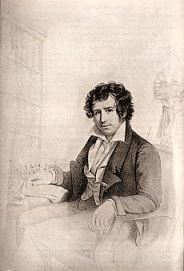 At the height of the Battle of Alcañiz on May 23 1809, as he was about to give the order for a desperate charge by French troops into the center of the Spanish line, Col. P.F.M.A. Dejean happened to glance down. The air around him was thick with gunpowder and blood, but on a flower beside a stream, he saw something unusual. A beetle. Species unknown. He immediately dismounted, collected it, and pinned the specimen to the cork he had glued inside his helmet. Dejean was a count and a battle-tested leader in the Napoleonic armies; he would later become Napoleon’s first aide-de-camp. But he was also, above all, a coleopterist, a specialist in beetles. His men knew it because many of them carried glass vials for him and had orders to collect anything on six legs that crawled or flew. His enemies knew it, too, and out of courtesy and respect for the cause of scientific discovery, sent him back vials taken from the dead on the field of battle.
Having collected this latest prize, Dejean swung back up into the saddle and launched the attack. With bayonets fixed, the massed French forces advanced up the slope toward the Spanish artillery. The gap between them slowly closed, everything tense and quiet. Then, at the last moment, the cannons let loose a storm of grapeshot into the faces of the attacking line. Hundreds of French soldiers died. Dejean’s helmet was shattered by cannon fire. But he and his specimen survived intact.
To modern readers, Dejean’s reckless passion for beetles in the face of enemy fire may well sound insane. Even in that species-besotted era, there was little prospect of glory in it. By the time he got around to describing his prize from Alcañiz years later, some other naturalist had already found the species and recorded it in a scholarly journal. In any case, both naturalists were soon forgotten, along with their beetle.
And yet glory and wonder were everywhere in the air then. Dejean and like-minded naturalists were fanning out across the globe to play their part in a fabulous adventure story. They regarded the hunt for new species as one of the great intellectual quests in human history, and with good reason. At the start, naturalists knew no more than a few thousand species, and often had the basic facts wrong. Even educated people still inhabited a jabberwocky world in which monsters abounded, and one species could slide uncertainly into another. Naturalists then could not even clearly distinguish some plants from animals and passionately debated whether one could transform into the other, and back again. That would all change, as a small band of explorers – the species seekers – set out to break through the mystery and confusion.
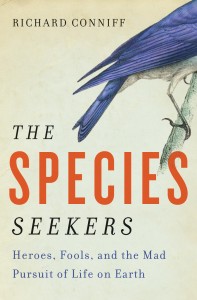
About the author: Richard Conniff is an award-winning magazine writer, a frequent commentator on NPR, and a guest columnist for the New York Times. His writing on the natural world and animals has led to adventures around the globe, often in the footsteps of the original species seekers. His most recent book is Swimming with Piranhas at Feeding Time, and he tells the story of Twain and other adventurers in a new hardcover book, The Species Seekers: Heroes, Fools, and the Mad Pursuit of Life on Earth.