The News Factory in Murder City

By Douglas Perry

Historical research can be an intimate undertaking for a writer. Reading someone’s diary and personal letters, or even paging through smudged, hand-written police logs, bring home with real power how you’re dealing not just with your imagination, but with actual human beings.

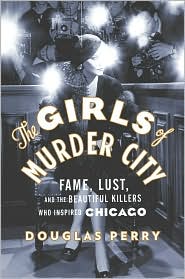
But when researching my new book The Girls of Murder City: Fame, Lust, and the Beautiful Killers Who Inspired ‘Chicago’ cold, hard steel also played a significant role in taking me back in time. I’m not talking about guns, though the book’s narrative turns – repeatedly – on the ill-advised use of firearms. Instead, I’m talking about … the Linotype machine.

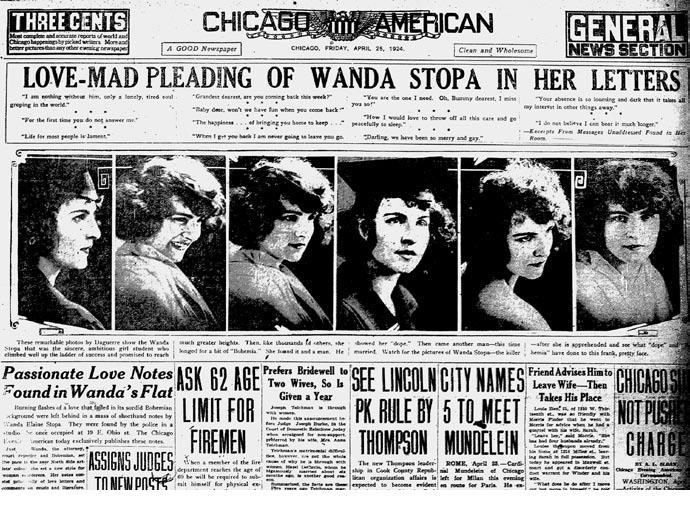
The Girls of Murder City is about a series of murders by Chicago women in 1924, an epidemic celebrated and driven by the city’s daily papers. I work at a newspaper, but the “hot type” era was long gone before I joined the biz. Needless to say, we work in bits and bytes now, with words flying through the ether to reach their destination. No longer do the windows vibrate at 6 p.m. when the printing press starts up for the early edition. The press no longer needs to be in the same building as the newsroom, so it was removed from the basement years ago in favor of an upgraded facility out in the ’burbs. The newsroom is much like any other office environment, with cubicles and computers and David Brent types wearing khaki.

Back in 1924, it was a very different scene. As a 1960 industrial film about the news business put it, “A newspaper is 10 percent editorial, 90 percent light engineering.” The centerpiece of that 90 percent was the Linotype, which revolutionized the industry in the late-1800s. Basically a typewriter suitable for Godzilla, this machine allowed small teams of men to quickly and accurately set page after page of metal type. Before the Linotype, newspapers were little more than pamphlets, for each page had to be set by hand. The Linotype meant a newspaper now could be as large, and with as many editions each day, as advertising and circulation could make economically feasible.

I got to see one up close – this particular one was manufactured in 1947 – and have it demonstrated for me. It’s an ingenious machine, classic industrial-age innovation, with gears spinning and mechanical arms swinging back and forth. Oh, and a pot of 550-degree molten metal strapped onto the back! Thanks to the Linotype and other 19th century mechanical marvels, a newsroom in 1924 wasn’t an office at all but a factory – a news factory. Linotype machines clicked away constantly, steam tables hissed, pneumatic tubes popped. It all produced a pounding, inescapable noise that lasted throughout the day and deep into the night.

No wonder reporters stayed away from the newsroom as much as possible, instead spending their days – and even writing up their stories – at the courthouse, the local police station or, of course, the speakeasy.

Douglas Perry, author of The Girls of Murder City: Fame, Lust, and the Beautiful Killers Who Inspired ‘Chicago’, is an award-winning writer and editor at The Oregonian in Portland, Ore. Find out more about him and his book at www.douglasperry.net
Giveaway is closed.

Would you like an email notification of other drawings? Sign up for our giveaway email list by clicking here

Related Posts:

  • http://twitter.com/cflinnds Cheryl

    This sounds just up my street. Perfect. Pleeeeze choose me for a free copy. (Do I get points for having just tweeted about it?) Thx.

  • http://www.wondersandmarvels.com Editor

    Well, yes, yes you do! :) Anyone else want brownie points? Just add your Twitter name along with your comment and let us know you tweeted. Plus it’ll be a nice way for fellow history lovers to connect on Twitter.

  • Suzanne

    Will the iphone be the next Linotype? I guess I’ll have to read this to find out!

  • Betsy Connolly

    I love this era. I grew up in Saint Paul, MN, which in the 1920s was “Little Chicago” – due to police and government corruption, any of the Chicago gangsters who wanted to dodge the law came to Minnesota. There’s still old speakeasies in my old neighborhood, and locals can tell you which apartment buildings John Dillinger lived in. Such a fascinating era in history…sign me up for a copy!

  • http://www.planetpeschel.com Bill Peschel

    In the ’70s, I was a copyboy at The Charlotte Observer and got to see the transition from Linotype to computers (if I knew then, I would have bought stock in the industry). It was fascinating to see the lead ingots being fed into the hopper, the type coming out in neat rows, the workmen communicating through ASL. Working as a Linotype operator was the perfect job for deaf men with mechanical aptitude, because their hearing was already shot, and you needed ASL to talk.

    I remember one story about an operator who left his lunch, including a can of corn, on top of his machine. He left it there too long, however, and the can exploded, showering corn all over the room.

  • http://www.jslion.wordpress.com Jonathan Slaton

    This looks like a fascinating book.

  • http://fewmorepages.blogspot.com Katy

    Wow, this sounds wonderfully interesting!

    I retweeted your tweet about this post @afewmorepages :)

  • http://unabridged-expression.blogspot.com/ Audra

    I am dying to read this one — it’s on my wishlist with my wife should I not be lucky enough to win a copy! ;)

    I’m not sure I can say I envy Mr Perry’s experience seeing/hearing the Linotype in action, but I do love that kind of historical detail and experience — makes everything far more real.

    (I tweeted: http://twitter.com/unabridgedchick/statuses/21938001960 — always happy to get W&M more press! :)

  • Cheryl Smith

    This looks like great fun. My favorite ‘toy” as a child was an old Royal typewriter on which my brother and I would take turns typing out the saga of our imaginary adventures fueled by an old, dented metal globe (with no stand). And of course, who was not fascinated by the noise of the newsroom in the black and white movies with Cary Grant and Roslynde Russell? Even in newer films (James Bond) the presses roll and are instruments of possible death! Computerization may have smoothed the process, but a lot of “really cool” machines have been put out to pasture!

  • Jessica B

    Wonderful bits of history, both the discussion of the linotype and the book itself. I think I’d probably be writing up my stories in the speakeasy too, despite the possibility of murderous women at the next table!

    I retweeted at @jabrockmole!

  • http://ticklemebrahms.blogspot.com Paul

    This sounds really interesting. Please sign me up for the contest.

  • http://wondersandmarvels Patrick

    I love chicago history. This book looks fascinating.

  • Reynolds

    As a one-time stringer for a mid size paper turned history teacher, this book sounds like a great read. I’m sure the vibrating windows would get old in a hurry but there is an unmistakeable nostalgia for this era of journalism in American culture. I would love to use this as a source for teaching the era to my digital-era students. Send me one, if you please. By the way, I found this through cheryl’s tweet so big thanks to her! @ghsrbodenhamer.

  • Sara Ziemendorf

    I remember setting type in the old printing classes in high school. Those little letters were a lot of fun, I remember, but it took a lot of time!

    I’d love the book, it sounds incredibly interesting!

  • librarypat

    Interesting post. Had hope to find out more about the women, I’ll just have to read the book to find out : ) I didn’t realize the show CHICAGO was based on real cases. I can see how the presses would interest you. The old true printing presses of the 1600s, 1700s, and into the 1800s are fascinating. The presses of the mid 1900s were big and noisy, but I can see how they would have their own special “charm” especially to and newspaperman. They actually sound like lumbering dinosaurs.

  • http://www.KarenAdamsEditing.com Karen Adams

    Oh boy oh boy oh boy. I want this book!! I lived in Chicago for a decade and worked for a typesetting/tech writing firm too! We didn’t have a Linotype machine, it was the 80s, but the old guys used to tell us stories about them. Actually, I think I’ve read a review of this book–these women are the basis for the musical/movie Chicago, no? Sadly, I don’t tweet, but I did just post a note about this blog to my two yahoo writers groups (2000 members; 10,000 members.) Maybe that counts?

  • http://booksbythewillowtree.blogspot.com Marie Z Johansen

    Oh Yes! I SO want to read this interesting book. I have asked that our library buy it because I can;t get Inter Library books that are new. Sounds like a very good title! Thanks for the opportunity to read it !

  • http://chewdigestbooks.com Gwen

    The current celebrity/media craze have nothing on the early 1900′s. Whenever I read a book about this period, I am shocked and totally entertained by what fearless reporters would do get get the story. And, now that I think about it, what lengths people would go to become the story!

  • Leslie Shortlidge

    I love books about the newspaper biz and what it hath wrought! I tweeted this post and my Twitter name is Bookorama.

  • Carol Wong

    I loved old black and white movies about newspapers. Would really enjoy this book. Please enter me.

  • Kathi

    My dad was a Linotype operator for many, many years (1940′s – 1970′s). After returning from WWII, he attended Washburne (Chicago trade school) to learn the skills. His job involved not only proofreading (and occasional editing) but typesetting as well. As a graduate also of Northwestern University’s night school, he was highly literate, as well as a regular “blue collar” guy. Linotype operation was a wild and woolly thing, and from the stories he used to tell, he worked beside quite a cast of characters, at places as diverse as the Chicago Sun-Times, the Racing Form, and the Chicago Board of Education. I would love to get a free copy of the book, to get a glimpse of the “story behind the story” as it were.

  • sung

    The books sounds exciting! There’s something really interesting about the turn-of-the-century world.

  • http://birdbrainbb.net Anastasia

    I took a class on the history of publishing last semester, but we unfortunately never got into the actual mechanics of making newspapers. This was such an interesting post!

    And yeah, I totally want to be entered in the drawing. :D

  • Lavonda Robinette

    This looks like another great read!

  • http://libraryofmyown.blogspot.com Amanda

    OOoo this does sound interesting. Thanks for the giveaway!

  • Nadine

    I remember Linotype! Would love to read this Chicago history. Also Tweeted one of the other books at http://twitter.com/madisoncheap for “extra credit” (a.k.a. brownie points).

  • Nadine

    I remember Linotype and the sometimes lurid headlines in Chicago newspapers. Would love to read this book. Tweeted your giveaways at madisoncheap for extra credit.

  • Jeff Landaw

    I came into this business just in time to witness the end of the linotype era; I use ‘linotype’ as one of my Internet signons. One small point, though: Unless the operation was very small, the linotypes were never in the newsroom; they were usually on a floor below, with copies and proofs going back and forth by pneumatic tube. They still had the tubes when I started at my paper _ and the hot-type veteran printers, mostly reduced to doing paste-up. Now they’re gone too.

  • reeca elliott

    Sounds fascinating!!!! Thanks so much!!!!

  • David

    I would have loved to have seen a Linotype in operation. It sounds quite amazing.