On a sultry day in July, 1550, soldiers in the army of the Holy Roman Empire were encamped outside the city of Mahdiya, near Tunis, nervously awaiting orders to launch a final assault on the town, a stronghold of the Turkish pirate Dragut. A Spanish officer and his companion, a surgeon in the emperor’s army, were strolling through the camp when they came upon two soldiers engaged in a heated quarrel. The men drew their swords and squared off.
The Spanish officer tried to stop the brawl, only to receive a backhand blow that neatly sliced off his nose, which fell to the ground. As the astonished officer stood with his mouth agape, bleeding profusely from the face, the surgeon calmly picked up the severed nose from the dirt. “Holding it in my hand,” he later recounted, “I pissed on it, and having washed it off with urine, I attached it to him and sewed it on firmly, medicated it with balsam, and bandaged it.” When he untied the wound, the surgeon later recalled, “I found it was very well attached again, and everyone marveled at it.”
The quick-witted surgeon, Leonardo Fioravanti, would go on to become one of the most controversial figures of the Italian Renaissance. The rise of print culture enabled him to become a celebrity doctor and the focus of an alternative medical movement.
A prolific writer, he used his books to advertise his “new way of healing” and to dramatize daring surgical interventions such as reattaching the Spanish officer’s nose. He created the first mail order medical business and published glowing testimonials from patients, as patent medicine vendors would do ever after. To an age in which TV doctors push newfangled drugs and fad diets, the life and adventures of Leonardo Fioravanti seem as relevant as ever.
William Eamon is Regents Professor of History and Dean of the Honors College at New Mexico State University, where he teaches history of science and Renaissance history. His latest book is The Professor of Secrets: Mystery, Medicine, and Alchemy in Renaissance Italy. Eamon’s previous books include Science and the Secrets of Nature: Books of Secrets in Medieval and Early Modern Culture (Princeton, 1994). More information can be found on his website: www.williameamon.com,
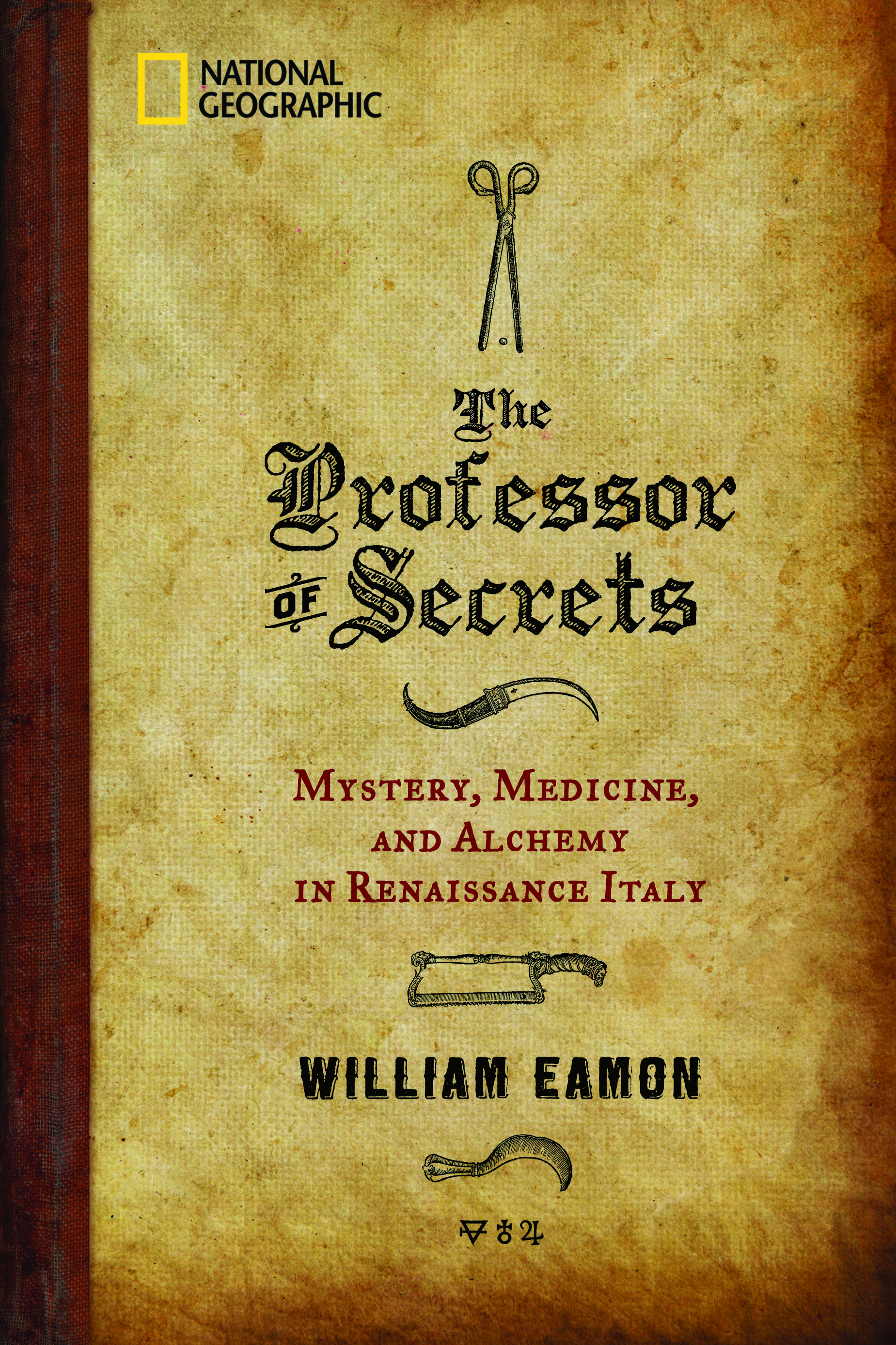
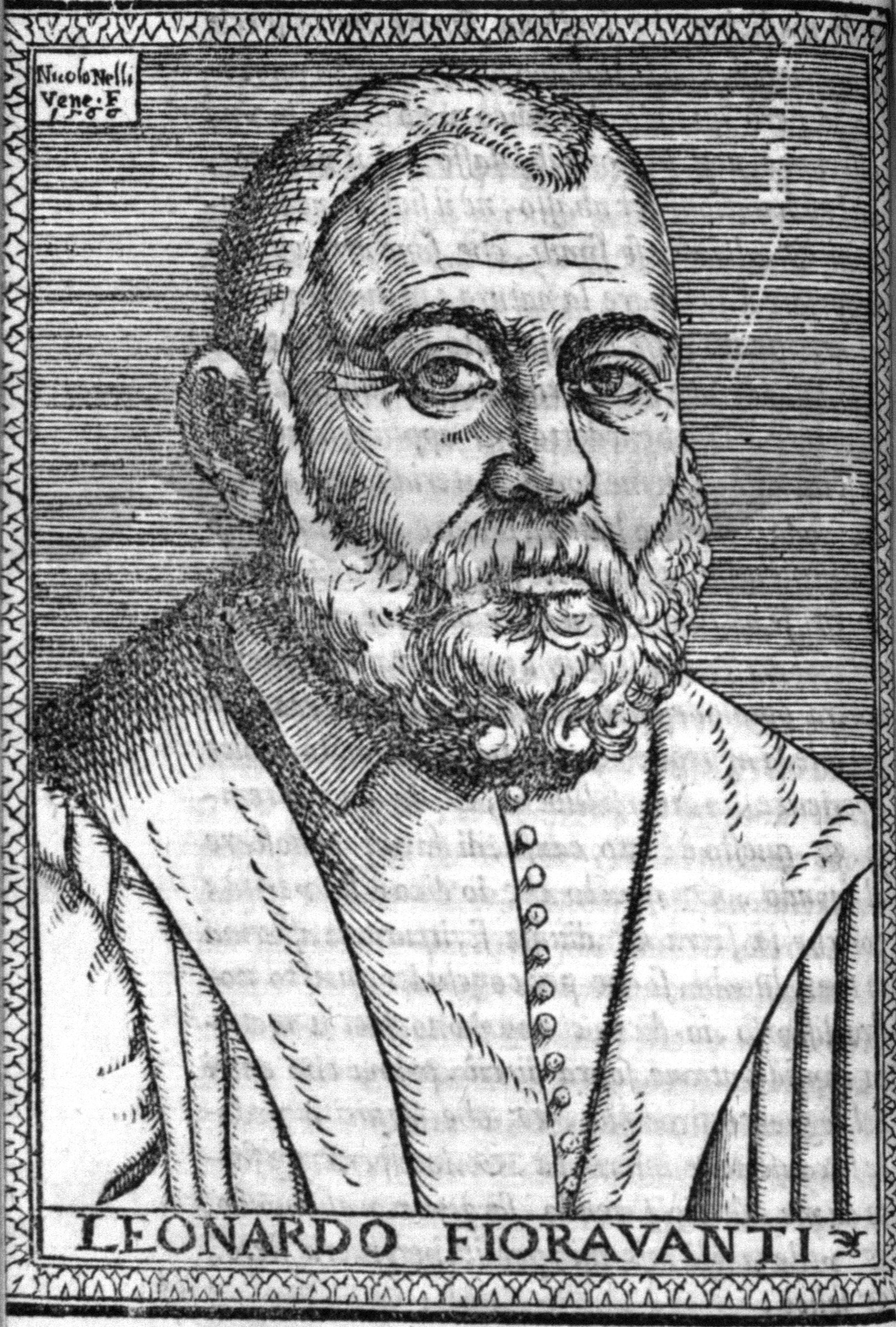
IMAGE:Leonardo Fioravanti, Courtesy of University of Wisconsin Library
I love anything Italian Renaissance! Thank you for the giveaway!
Jared Wasser
I’d love a copy of the book, sounds fascinating!
http://chewdigestbooks.com Gwen
And here I thought that urine was just good for jellyfish stings! Seriously though, what medical science knew when is completely amazing to me. We tend to think that all breakthroughs happened in the past 100 years or so and it is simply not true.
I read The Doctor and the Diva by Adrienne McDonnell last month and was astounded to learn that doctors were secretly trying artificial insemination in the late 1700′s.
http://thetruebookaddict.blogspot.com/ Michelle @ The True Book Addict
That is amazing! I would love to read more about him. Thanks for the giveaway!
librarypat
I would not have liked to have been on the receiving end of that treatment, but it worked and that is the important part. We for get that urine is sterile unless the individual has an infection that would contaminate it. Reading about this transitional time in medicine should be most interesting.
Jim Evans
Urine has had many interesting uses in th epast. I wonder if we are still using urine but have a euphamistic substitute for the word.
poltergasm
the magnificent miracle that is piss–unanaesthesized & uneuphemised. whoda thunk it { somewhat } properly, { certainly } usefully utilized in the post-primordial ooze that was pre-shakespeare? it gives this tired old used clothing dealer rather a jolt, i can say that much.
then again, if the tired old antiquarian of the vestments in the vestibule remembers correctly–& i do–her previous spouse { aka #2 } believed the essence of the earth arose thru his personal stream from the dirt upon which he personally mizzled it–sort of a happy & Super natural return on his investment, if you will. then again, he IS a crazy nature guide who probably invented naked hiking–even if he didnt quite know it.
–best to you
Kitty
Celebrity doctor with a mail order business? Sounds familiar!
http://morbidanatomy.blogspot.com/ Joanna
Small world! I just re-posted an Eamon piece on my blog in a piece titled “The Dangers and Pleasures of Curiosity [http://morbidanatomy.blogspot.com/2010/08/dangers-and-pleasures-of-curiosity-from.html] , from Saint Augustine to the Renaissance” and thus made his acquaintance. I would love to win a copy of his book, which I ALSO just saw at the National Gallery Bookstore yesterday and coveted!
http://www.wondersandmarvels.com Editor
Love your site, Joanna. It’s amazing.
http://candidcanine.blogspot.com chris v
Sounds like an interesting book;; can’t image what some of the other treatments…
http://brokenteepee.blogspot.com Patty
Wow..a nose reattachment. Wild!
Please enter me.
Carol Wong
I am very interested in any book that is connect to medicine. Please enter me in this contest.
http://TheHistoryBluff.com Dave
I wonder if the officer could faintly smell urine for the rest of his life.
Suzanne
Fioravanti…a master of self promotion (even when he used the writings of others to do it!). I hope I win this one!
Bob Zender
I just finished reading Hollister’s textbook on Medieval Europe and he was adamant that science made greater strides during that time period than it did during the Renaissance. Not only was that contrary to what I remembered being taught, it flies in the face of the brief snippet I just read. I’d love to have a copy!
Serena
I can only imagine what the Spanish officer thought as Fioravanti “rinsed” off his nose before reattaching it! I’d love to read this book. Please enter me in the drawing.
http://n/a Peggy Coats
alchemy alone is an interesting topic, but coupling it with medicine and medieval times sounds totally intriguing! Would love to read the book.
Rabbi Jerry Kane
I think great Jewish scholar Moses Maimonides, who was the court pysician to the sultan Saladin in the twelfth century probably would have handled the procedure a little differently!
Shelli
Looks like a great book!
Carter
I think it would be interesting to read about celebrity doctors in the Renaissance and compare it to modern day celebrity “doctors” and “alternative medical movements.” I would love to be entered for a chance to win a copy.
Erin H.
This sounds like a fascinating book!
Jack
Back in the USA now, but having been CEO of an Italian company in Ancona, Italy for over 3 years, I have fallen in love with the country. It is the one place I would live ouside the US and feels like my second home. I would love to receive a copy of William Eamon’s latest effort. Oh to sit and sip a glass or 3 of Conero Russo while reading of the past.
Hiro Hirai
I really have to read this book!
Sheri Knauth
Medicine has advanced so far but doctors… not so much.
Someone was speaking to me about bedside manner – when will doctors learn?
This would be a good read to share with my neighbor.
Raz Chen-Morris
A wonderful story, it seems many had problem with losing the tip of their noses in duels. Another famous case is Tycho Brahe. His nose wasn’t sewed but he used prothesis (either of copper o rplatinum) for the rest of his life.
http://blog.crazyforwords.com Heather
This looks like a great read! I’m going to add it to my list.
http://www.jane Jane Sevier
What a fascinating story from one of the most richly intriguing periods of history. It’s easy to believe that the cult of celebrity is a recent phenomenon, but celebrity doctors, clergymen, and even athlete have been around for eons.
Shannon
Did peeing on the nose help the reattachment, or hurt it? It’s kind of icky, but very fascinating. =)
Everett
So wait, I shouldnt be offended when somebody says ‘Ill piss on your nose’?
I think both the Vikings and the Indians (as in subcontinent) also had a few different uses for urine-Is this correct?
Sounds fascinating either way, great site.
Debbie D
Please include me in your giveaway.
Thanks
Debbie D
http://www.medievalists.net Peter Konieczny
I would like the chance to read the book and review it.
Dianne
So here’s my question: did the nose work properly after it was reattached? How was his sense of smell after surgery?
These are the things that keep me awake at night.
moriartytth
hey- so, i’d like to be entered into the drawing for the free book.