In the summer of 1932, the phrase “planned obsolescence” was born—conceived by a Manhattan real-estate broker named Bernard London as a remedy for the Depression then wracking the nation. He proposed that the government “assign a lease of life to shoes and homes and machines, to all products of manufacture,” after which time “these things would be legally ‘dead’ and would be controlled by the duly appointed governmental agency and destroyed if there is widespread unemployment.”
These days that strategy wouldn’t work as an unemployment cure, since U.S. workers don’t produce the bulk of our daily-use products. And today, of course, we don’t need government to collect and throw away perfectly usable “dead” objects based on some arbitrary expiration date, because the goods we buy die of “natural” causes inherent in their making, or get tossed when they’ve become outmoded.
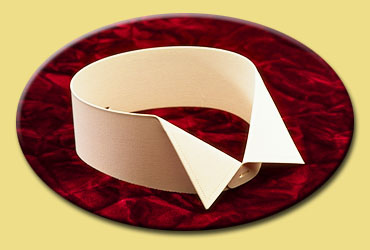
This trend toward producing throwaway items began in the nineteenth century. Among the earliest examples was invented along the Hudson River: the detachable cuffs and collars that gave Troy, New York the appellation “Collar City.”
Then, as now, the driving market forces were status and convenience. Men needed clean, white, starched shirts to wear to work in occupations that were just coming to be known as “white-collar.” And it was women’s job to wash them. Laundry burdened women with a routine of time-consuming, hard physical labor.
Hannah Montague of Troy wearied of having to wash her husband Orlando’s shirts when only the collar was dirty. So one day in 1827, she snipped off a collar, laundered it, and then sewed it back on, creating the world’s first detachable collar.
Recognizing the business opportunity stemming from his wife’s ingenuity, Orlando opened a factory overlooking the Hudson that produced collars, dickeys, and cuffs. Soon, factories started making these shirt pieces out of paper. In 1872, 150 million paper shirt collars and cuffs were produced in the U.S., and by 1886 more than 8,000 workers were employed in the trade in Troy alone.
Blue-collar labor manufactured white-collar status symbols that could be discarded after a single wear, and the age of disposability had begun.
NOTE: Detachable collars continue to be manufactured today, and are available for purchase from Amazon Drygoods Collars and Cuffs in Davenport, Iowa, which still uses 1860s presses. You can visit their website by clicking here.
This is a marvelous and interesting article. I never realized planned obsolescence had such a good-intentioned beginning.
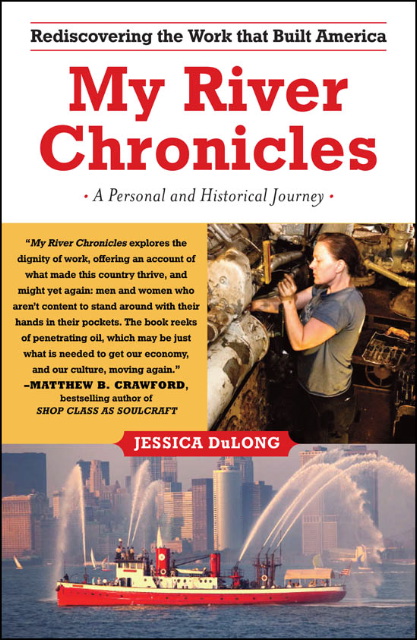
And I’d be delighted to read MY RIVER CHRONICLES.
-kjc
Maverick
Sounds like a really interesting book. I’d love to win it!
Susan P
Thanks for Troy history. I’m always interested. Have poked around on Hudson looking for ways women have been involved there, beyond textiles, so looking forward to the book, too!
Dave
Bookmark. What a fantastic website. First time here, but I can already predict many more visits.
And nice historical piece on a topic I rant about on occasion to friends. During college, I came across the concept as ‘built in obsolescence’ and it was one of the few things I retained. I’d finally discovered the reason behind all my dead iPods (with a built in battery, of course)!
Crossing my fingers for a chance to win the author’s book!
Anne
I think tossing dirty stuff rather than cleaning it is a perfectly sensible approach to housekeeping!
http://jslion.wordpress.com JSlion
Sounds like an interesting book. Look forward to reading it.
http://www.wondersandmarvels.com Editor
Thanks everyone! The winners of this book are: JSlion, Anne, Susan, Maverick, and Kelly!
http://www.myriverchronicles.com Jessica DuLong
Thanks for all your great comments. Hope the winners enjoy the book. I’d love to hear your thoughts about it. Feel free to check out my blog at http://www.jessicadulong.com as well!
And to Susan P.:
For more history about women in Troy, check out the book Working Women of Collar City by Carole Turbin.
Pingback: Product Recall: Examining My Defective Addict-Driven Culture « A 40-Something Fool's Journey