
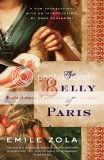
The Belly of Paris by Emile Zola

Reviewed by Mollie Cox Bryan

Food and politics are scattered throughout today’s headlines, but food has always been a part of the political conversation, whether it’s blatant or not—and writers have often used food as metaphor for love, life, politics, and more. In Emile Zola’s “The Belly of Paris” the writer skillfully weaves food into the everyday aspect of nineteenth-century Paris life, while keeping an artistic eye on food. As Mark Kurlansky notes in the introduction, this book is probably the first ”foodie” novel—a trend in current fiction.

The novel opens as the main character, Florent Quenu, finds his way back into Paris to Les Halles. He is literally starving, having just escaped from prison on Devil’s Island, As he stands in the middle of one of the biggest food markets in the world at the time, smelling and seeing all the incredible mounds of fresh cabbages and carrots and so on. Immediately, the reader is treated to an incredible outsider’s view of the market—pages and pages of food description as Florent wanders and eventually finds his way to his brother and his wife.

At first, things appear to be looking up for Florent, as he settles into the quiet life living with his family who operates a charcutiere. The descriptions of bloody animal parts and meat preparation are enough to turn the stomach of any meat eater. Still, it’s a bloody and cruel business, even though this slice of life is not pleasant to ponder.

As Florent settles in, he gets to know the characters of Les Halle, which are beautifully rendered character sketches—my favorite characters are the two young children who grow up to be lovers— Cadine and Marjolin. They grow up together, running wild and innocent through the market and are in direct contrast to many of the women characters who are cruel and vicious gossips. The couple stays together through all their misadventures. Cadine sells flowers in the market and Marjolin delights in the way she smells of the flowers. One of my favorite lines in the book is, ” She was a warm, living bouquet.” The sentence sticks out in my mind because it’s beautiful and poetic, but also it’s one of the shortest sentences in the book.

Zola’s text is dense and should not be rushed. He is relishing in the sights, sounds, smells of life in Les Halles. His descriptions are genius, but they border on too much. Just when you think you need to skip over a part, he switches gears and pulls you back into the story.

Florent’s downfall is his one and only passion—politics—even after his imprisonment, he gets involved in the politics of the day, which give the gossips of Les Halles every means to get rid of him. As a person who was not really familiar with this period of time in French history, I found Kolansky’s introduction helpful in finding my way through the text. Zola masterfully brings this slice of Second Empire French history to life.

Mollie Cox Bryan is an award-winning writer, essayist, and columnist. Be sure to be on the look out for her upcoming guest post on here on W & M. To read more about Mollie now, please visit her website

Read another wonderful Reader Review on The Belly of Paris.

Related Posts: